For any ecosystem to thrive, there is an innate need for collaboration and conversation. In the arts, where diverse voices often exist within their own niches, such exchange becomes essential to sustaining and expanding the landscape.
For any ecosystem to thrive, there is an innate need for collaboration and conversation. In the arts, where diverse voices often exist within their own niches, such exchange becomes essential to sustaining and expanding the landscape.
For any ecosystem to thrive, there is an innate need for collaboration and conversation. In the arts, where diverse voices often exist within their own niches, such exchange becomes essential to sustaining and expanding the landscape.
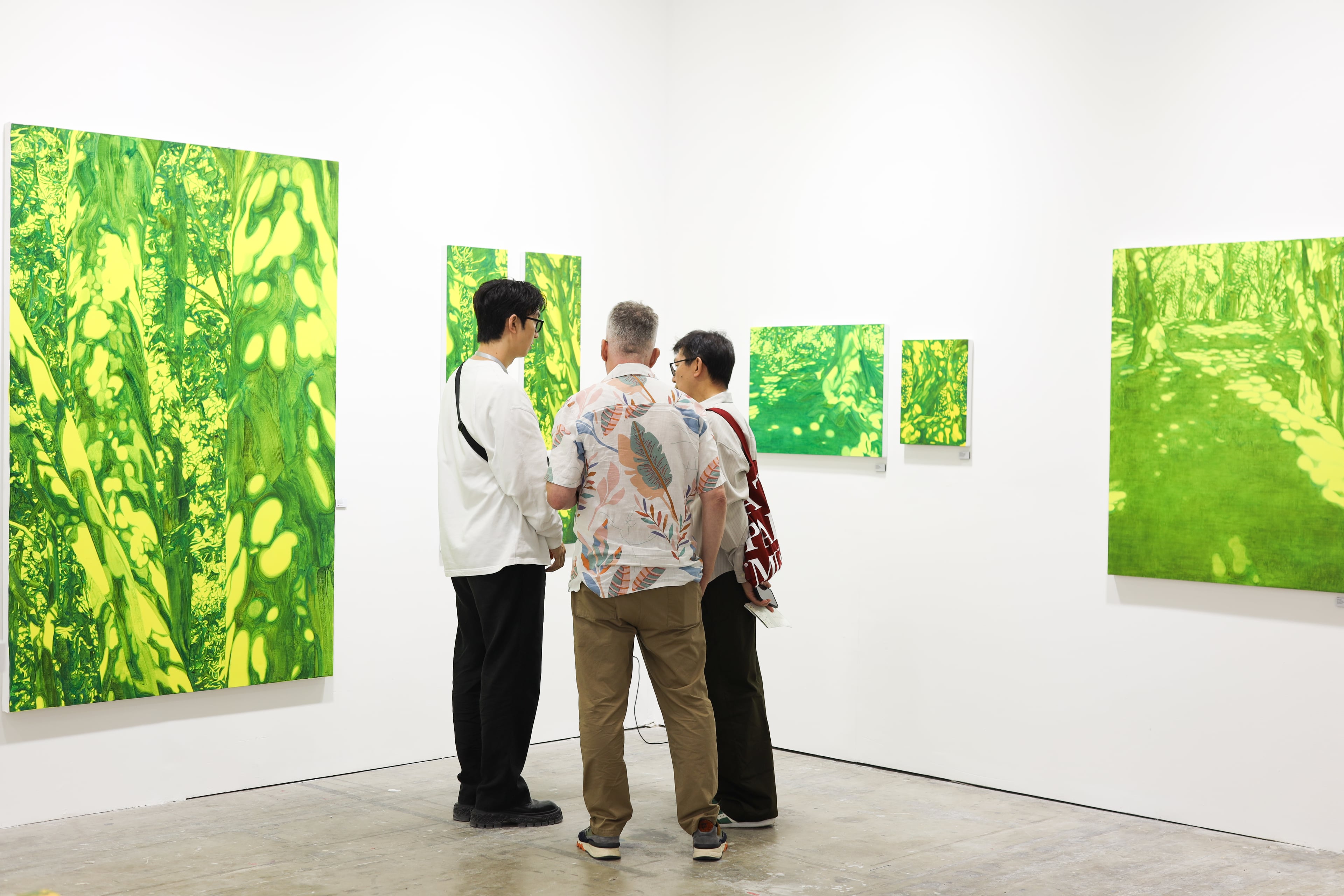
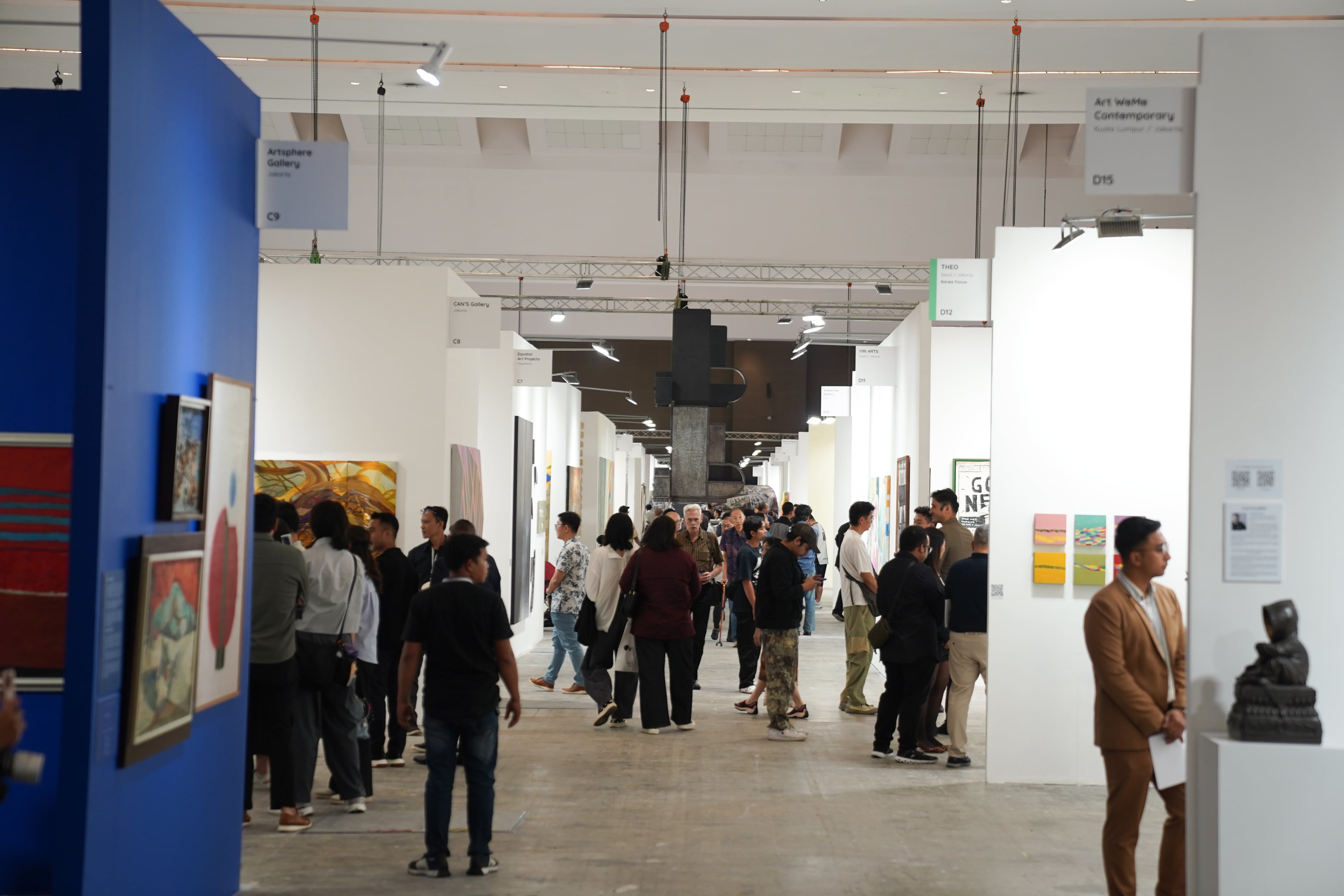
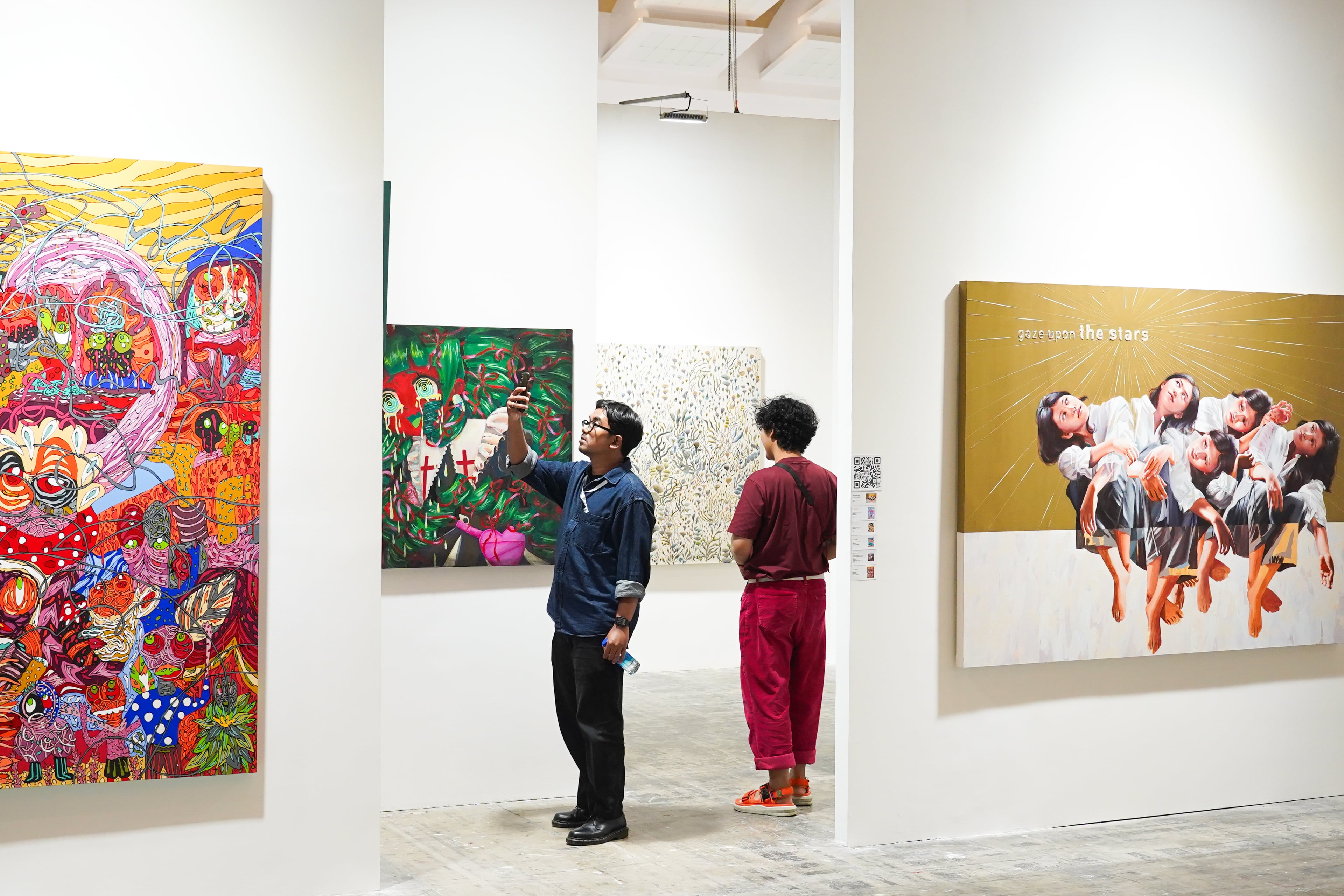
Art Jakarta 2025. Image courtesy of Art Jakarta.
AMBIENCE SPOT, Adi Gunawan at Art Jakarta 2025. Image courtesy of Art Jakarta.
Across Indonesia, regional art communities have been building their own infrastructure by creating fairs, galleries and artist-run spaces that are being recognised by international markets, and receiving support by festivals such as Art Jakarta. Festival Director, Tom Tandio, is pushing the conversation forward, by encouraging the merging of regional and commercial art worlds in a singular space. He says “For me, an art fair is successful when we become successful together. The ecosystem needs to thrive not only in Jakarta, but in other cities across Indonesia, and ultimately across the region.” In an in-depth interview with Tandio, we learn more about this year’s Art Jakarta festival (2nd-4th October) and its evolution over the years.
Arttaca:Since its inception almost two decades ago now, Art Jakarta has continued to be a platform for Indonesian artists and galleries to reach a global audience. Over time, have you seen a significant shift in the way Indonesian artists are appreciated, and positioned world over?
TD: The ability of Indonesian artists to reach audiences internationally; to inspire, to resonate, or sometimes even to provoke and shock, has been part of our track record for a long time. If you look back, Indonesian artists were already internationally acclaimed as early as the 19th - early 20th century. And of course, we also had the Indonesian art boom in the early 2000s, followed by the emergence of strong auction records for living Indonesian artists.
What I think has changed significantly is not necessarily the quality or international relevance of the artists, but the structure around them. In the past, international breakthroughs could feel much more dependent on individual circumstances, or even due to a certain element of chance.
Today, that infrastructure is much more developed, and most importantly, accessible. We have seen the growth of both private museums and public institutions, and international galleries establishing a local presence. Artist representation itself has also become much more geographically fluid with Indonesian artists being represented by international galleries, and vice versa. There is now a stronger ecosystem that allows them to be seen and positioned globally on a more sustained basis.
Arttaca: Art Jakarta has grown from an annual fair into a year-round platform, with the inclusion of Art Jakarta Papers (February 2026),and Art Jakarta Gardens (May 2026), before its culmination in October. This is interesting because it showcases art in multi-layered dimensions, giving each craft a space to thrive. Could you touch upon the idea behind this expansion, and what it signified?
TD: I think the artistic need behind developing Art Jakarta into three fairs throughout the year has always been there. At its core, it’s about regenerating and broadening the audience, the market, and perhaps most importantly, the way people encounter and think about art.
With Art Jakarta Gardens, for example, collectors are encouraged to experience sculpture in an outdoor setting, rather than encountering it only within the conventional fair booth environment. The indoor-outdoor format also gives us the opportunity to develop music and performance programmes alongside the visual arts, which allows us to reach a wider public, including people who may not necessarily consider themselves part of the art world.
Art Jakarta Papers approaches regeneration from a different direction. Works on paper have often been treated as an “underdog” medium; sometimes because they are perceived as more affordable, sometimes simply because they are seen as “not painting.” But rather than resisting that perception, we thought we could use it as an opportunity to bring in younger collectors and those who are beginning to collect, perhaps through limited-edition prints or works on paper, and then surprise them with how conceptually robust and materially ambitious paper-based practices can be.
Ultimately, I think the expansion signifies that art in Indonesia and the region is not containable within one format. It can be encountered in a garden, on paper, in a gallery, in a boutique fair or within a large-scale fair.
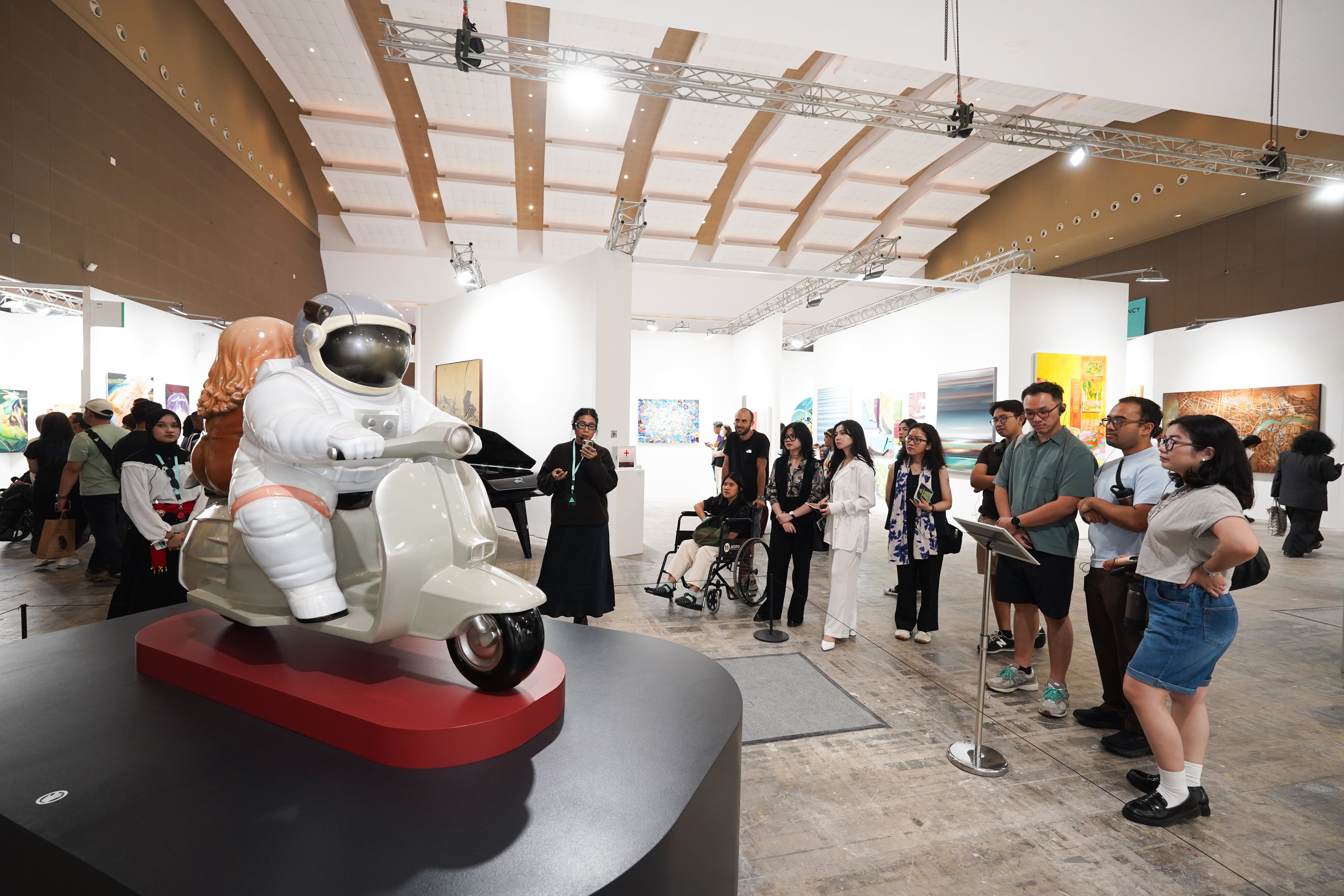
AMBIENCE Galleries at Art Jakarta 2025. Image courtesy of Art Jakarta.
AMBIENCE Galleries at Art Jakarta 2025. Image courtesy of Art Jakarta.
Arttaca: Indonesia has a strong culture of artist-run spaces and collectives. The idea of collectives breaks down the feeling of isolation in an overwhelming market. Could Art Jakarta eventually become a bridge between these alternative ecosystems and the commercial market without necessarily commercialising them?
TD:Art Jakarta is very much interconnected with the network of artist-run initiatives and collectives. I don’t think an art fair exists in isolation. The market also does not have to be something daunting or overwhelming. The market can be and IS exciting. It is something that is collectively defined and nurtured by artists, galleries, collectors, institutions, fairs, and communities. In that sense, I think it is natural for us to bring the spirit of collectivity into the market, and equally, to bring the market into these collective ecosystems.
But I would also be cautious about saying that Art Jakarta is somehow the bridge between the alternative ecosystem and the commercial market. Artist-run spaces and collectives have already been filling many of those roles themselves particularly at times when those commercial structures simply weren't there in the past.
Of course, now that Art Jakarta exists as a platform, we should ask how we can make that platform more useful. This is partly what we are doing through sections such as AJ Scene, where the booths are inhabited by artist-led and independent initiatives, project spaces, art merchandise, and other forms of practice that don't necessarily fit within the conventional gallery model.
This year, with the AJ Scope section “MTN Market,” we are taking that a little further. We are inviting emerging fairs from other cities to come to Jakarta; initiatives that may not yet have direct access to the established art market, but have the spirit and ambition to build an art fair for their own communities.
I wouldn't frame this as some noble mission for Art Jakarta to “bridge” two worlds. Perhaps we are doing some bridging work simply because we happen to have the platform to do it. But the relationship is equally the other way around. These communities also can connect us to places, practices, and audiences that we would not otherwise be able to reach.
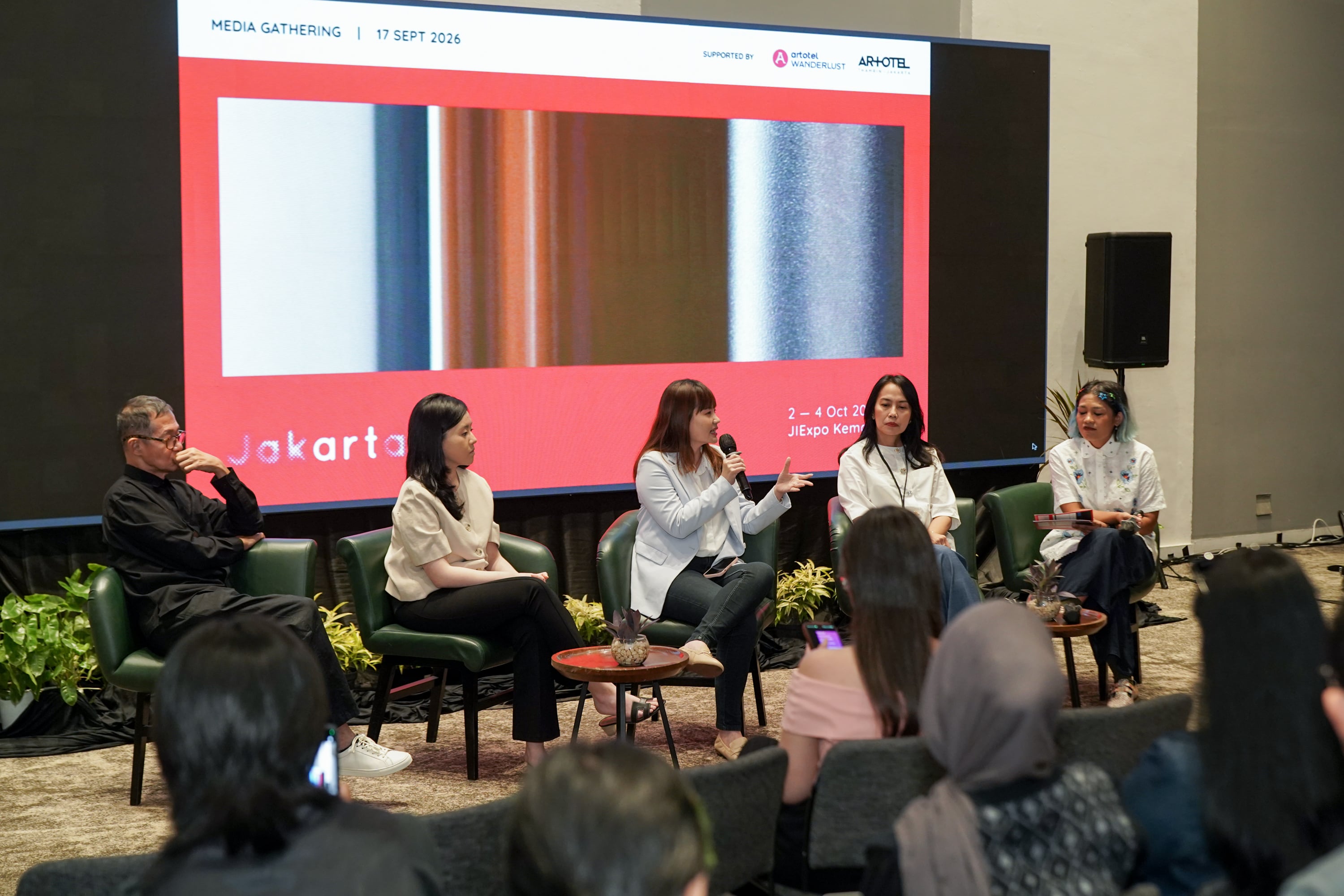
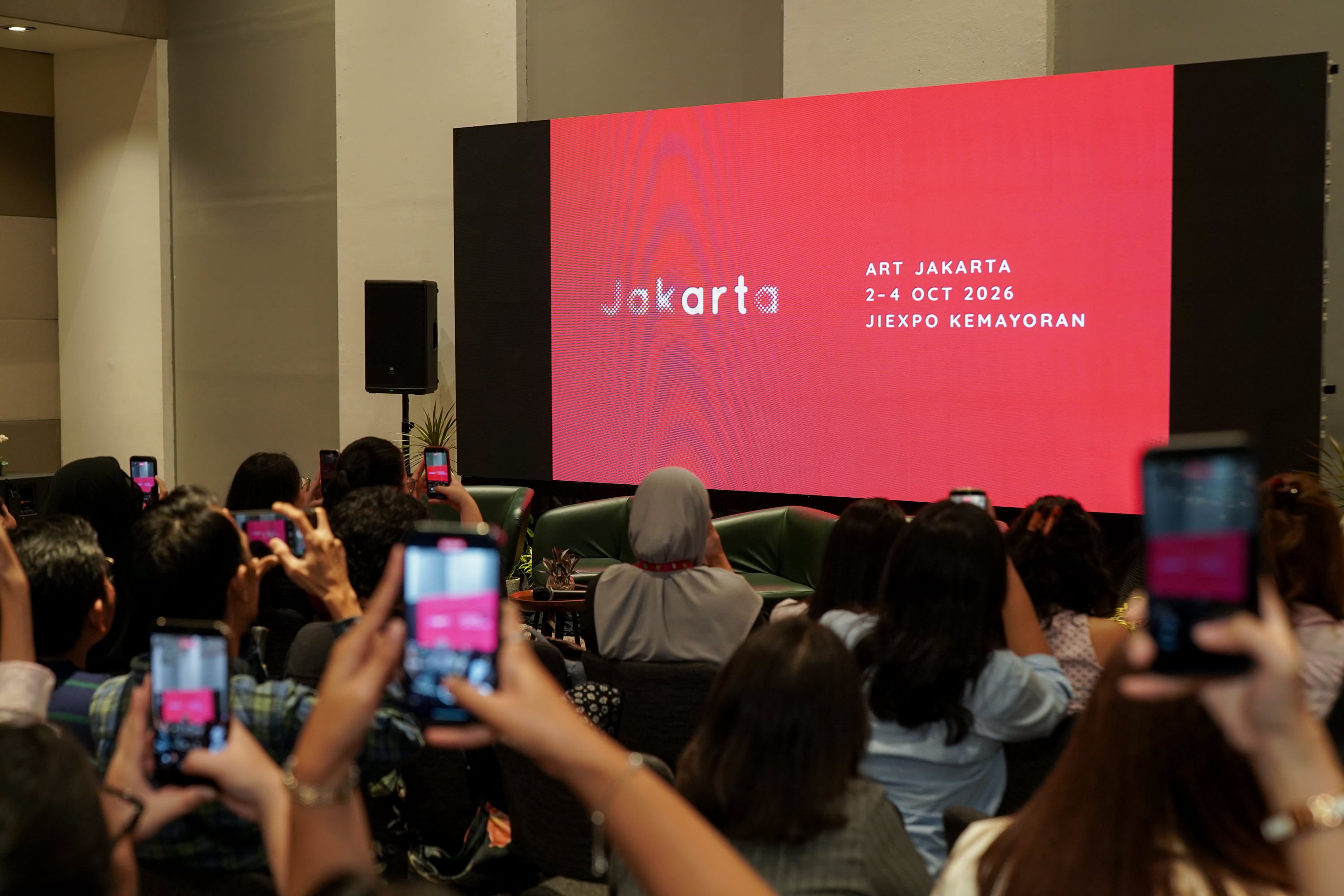
Art Jakarta Media Gathering Artotel 2026. Image courtesy of Art Jakarta.
Art Jakarta Media Gathering Artotel 2026. Image courtesy of Art Jakarta.
Arttaca: This year, AJ Spot moves beyond the conventional booth format allowing galleries to explore different scales and spatial approaches, while AJ Scene foregrounds collectives and collaborative practices. Does this help in challenging the traditional commercial architecture of an art fair? Could we then say that fairs have become festivals in their own right?
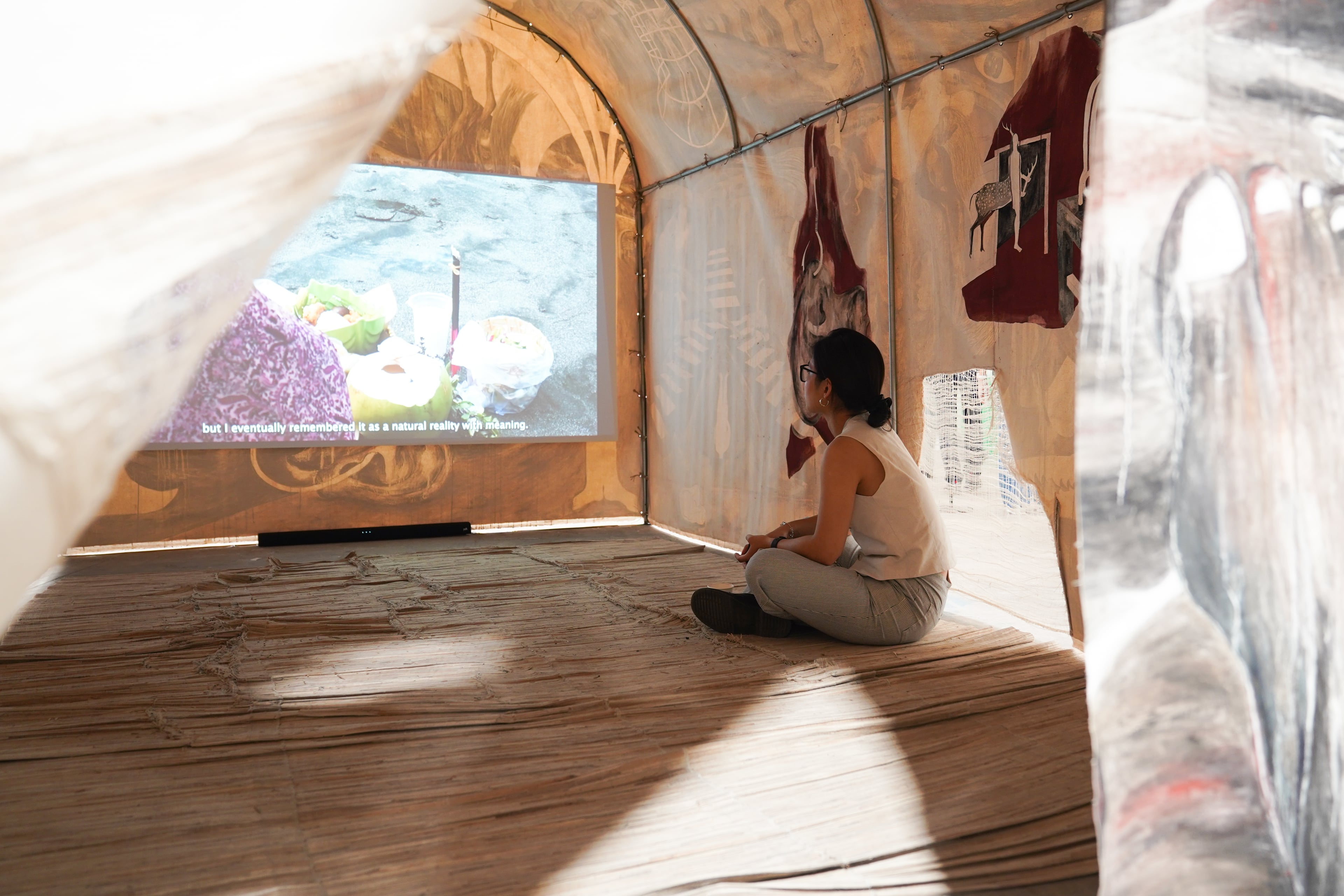
TD: If we take the word “fair” outside of its purely market context, it has always had an exhibitionary quality to it; an element of spectacle. One of the central motivations behind Art Jakarta has always been to regenerate the market; to keep audiences inspired. AJ Spot inhabits that function. It is about inspiring people to look beyond what can exist on a wall, and to think about how artworks can inhabit different scales and spaces. And importantly, the works presented through Spot are still works that can be collected, potentially, institutionally.
I certainly wouldn't claim that we are the first art fair to do this, but I think it is something that needs to happen for a fair to fulfil both of its functions: it needs to be a marketplace, but it also needs to be a great exhibition.
As for whether fairs have become festivals, I think the analogy is interesting, but maybe not entirely precise. A festival is celebratory, and I would like to think that there is something of that spirit here. We are all gathering together; the galleries are excited, the artists are excited, the collectors are excited, and we are celebrating our local and regional art together. And I would also include our sponsors in that. They are not simply supporting the fair from the outside; some are actively presenting special projects within the fair, collaborating with artists. So maybe that’s the extent to which an art fair is festival-like.
Challenging the traditional commercial architecture doesn’t mean abandoning it. There is still value in the structure of an art fair, and the market function is important. I think that structure can be pushed further, and I want to push Art Jakarta further, to break more boundaries and experiment with more possibilities, but only where the art demands it. And at the same time, maintaining and perfecting the structures that the art still needs.
Arttaca: How do art fairs make landscapes easier to navigate for the established collector, the new collector, institutions, international galleries, and the wider public?
TD: Indonesian art, and Southeast Asian art more broadly, is made up of distinct “pockets,” partly because of its collectivist nature. These pockets are often shaped by their cities, their communities, and the particular subjects or practices they are interested in.
That mode of connection is charming in itself, but I think an art fair has a particular duty here. We try to present and curate these different niches into an encompassing survey of the landscape; not necessarily everything, of course, but what we believe best represents the region at a particular moment, and bring it together in one space.
Curators, writers, and researchers are invited for panels and discussions. Artists come from outside the city to install their work or make special presentations. International galleries with an interest in the local scene meet local galleries with international ambitions. Their directors, who may not always be based in the region, are suddenly here. Collectors come, emerging artists come, designers come. And people who normally exist within their own particular niche are encouraged to share a space with other niches they might not otherwise encounter.
Senior collectors meet emerging collectors. Established artists meet emerging artists. Galleries meet institutions, writers meet artists, and collectors encounter practices that may be outside their usual field of interest.
We create the conditions for these different groups to encounter one another. There is a kind of cross-pollination of ideas, relationships, and interests. And sometimes that encounter is what allows people to find their way into a part of the landscape that they didn't know existed.
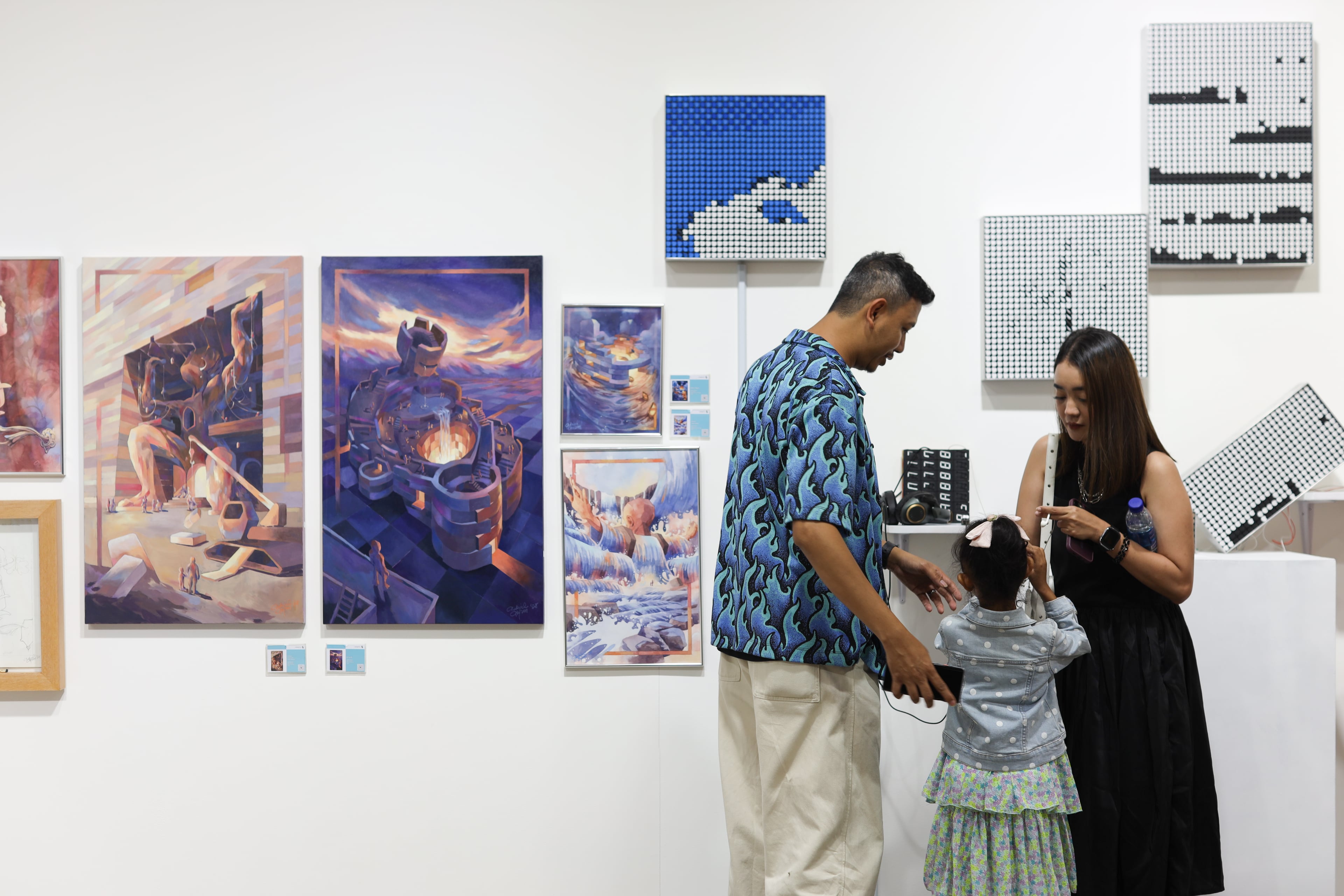
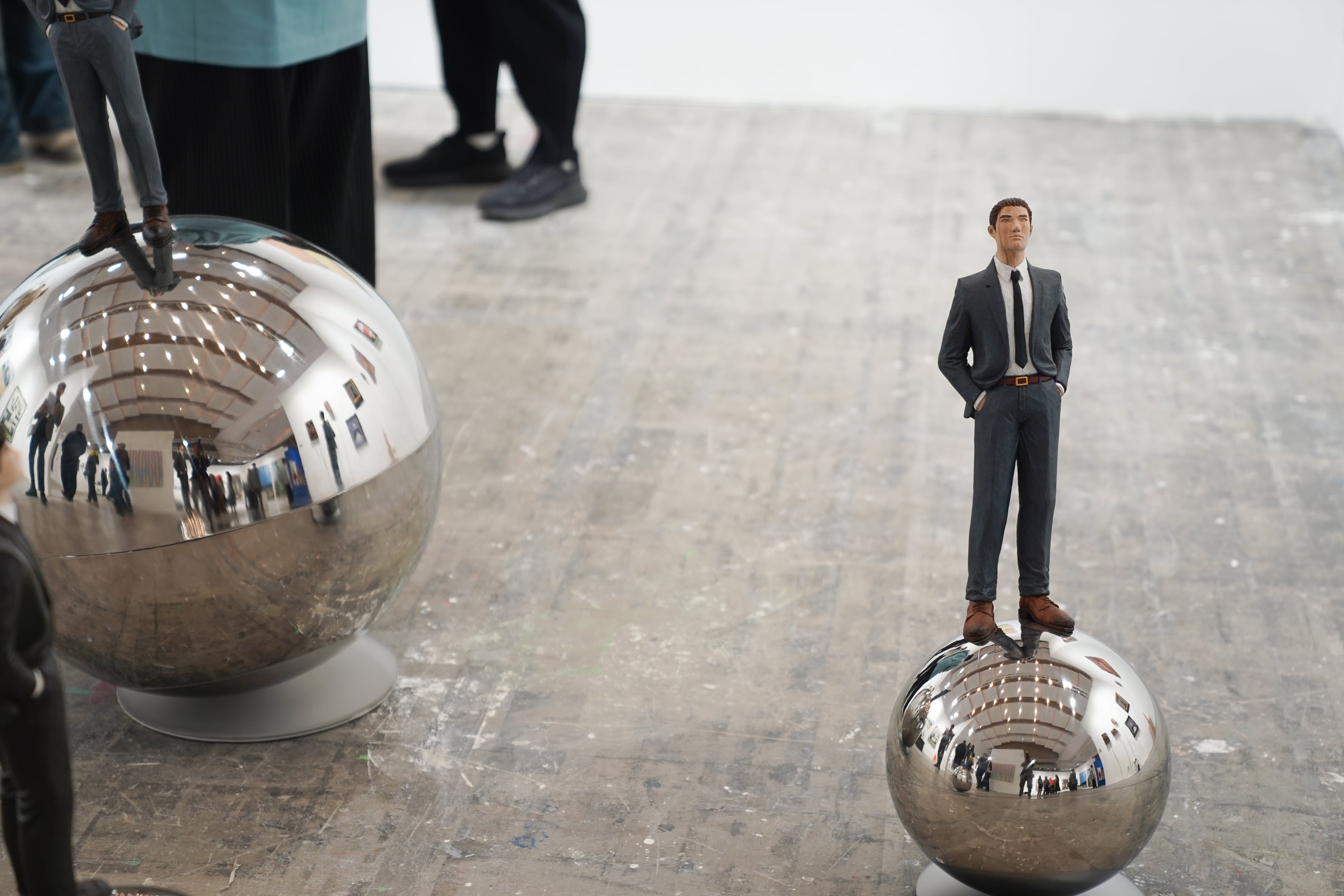
AMBIENCE Galleries at Art Jakarta 2025. Image courtesy of Art Jakarta.
AMBIENCE SPOT, Ipeh Nur at Art Jakarta 2025. Image courtesy of Art Jakarta.
Arttaca: With 75 galleries this year, and more than half coming from Indonesia, how do you balance giving national galleries a strong platform while also ensuring that Art Jakarta remains genuinely international and regionally connected?
TD: We want Art Jakarta to offer something different from the other fairs in the region. There should be an emphasis and a character that is distinctly ours, so that people have a reason to come to our fair, just as they have a reason to visit other fairs in the region. If every fair starts to look and feel the same, then why would you bother visiting all of them?
One of the simplest ways we can maintain that distinction is through the proportion of local to regional galleries. I think what we currently have is a good balance between having a strong Indonesian presence and maintaining our international and regional connections.
There is also an important principle behind who we invite. All participating galleries have to have a base in Asia. This is partly to prevent the fair from losing its regional relatability when looking for international participation. But I also think international galleries are strategic enough in what they bring. They can present artists and practices with an international quality and perspective, while still making curatorial decisions that allow those presentations to relate to the local audience and its interests at a particular moment.
Arttaca: If you were to look at fairs from a personal point of view as a collector, what would you usually be drawn to?
TD: I would like to attend a fair that connects me to the local scene. I need the fair to serve as an entry point from which I can explore more deeply and independently. I want a fair that inspires me and shows me something I haven’t encountered before.
I also love hanging out with artists and curators and having those organic encounters, so a fair that provides a platform for that is always great. That is how I first seriously started to collect artworks, by the way.
There is a particular pride and joy in discovering something new. So, naturally, a fair that brings together both established and emerging artists would be my preference. I need to see the established artists to understand what the scene is made of, and who is shaping it. But the emerging artists show you what the scene could become in the future, and whether that future will answer, challenge, or perhaps even overturn the questions being set by the established artists of the present.
I also hope that a fair has robust programming; something that takes me beyond the fair itself, perhaps into private or public collections, museums, and art spaces around the city. I want to feel that the whole city is enlivened by its presence, not just the exhibition hall.
And, of course, a good afterparty. I want somewhere I can mingle with other collectors, artists, and galleries after the fair.