When you look up at a network of trees, there is an overwhelming sense of belonging that humbles you. Whether it is the delicate distance between branches, referred to as ‘crown shyness,’ or the dramatic shaft of golden light that peers through the leaves, a forest quietly builds around you.
When you look up at a network of trees, there is an overwhelming sense of belonging that humbles you. Whether it is the delicate distance between branches, referred to as ‘crown shyness,’ or the dramatic shaft of golden light that peers through the leaves, a forest quietly builds around you.
When you look up at a network of trees, there is an overwhelming sense of belonging that humbles you. Whether it is the delicate distance between branches, referred to as ‘crown shyness,’ or the dramatic shaft of golden light that peers through the leaves, a forest quietly builds around you.
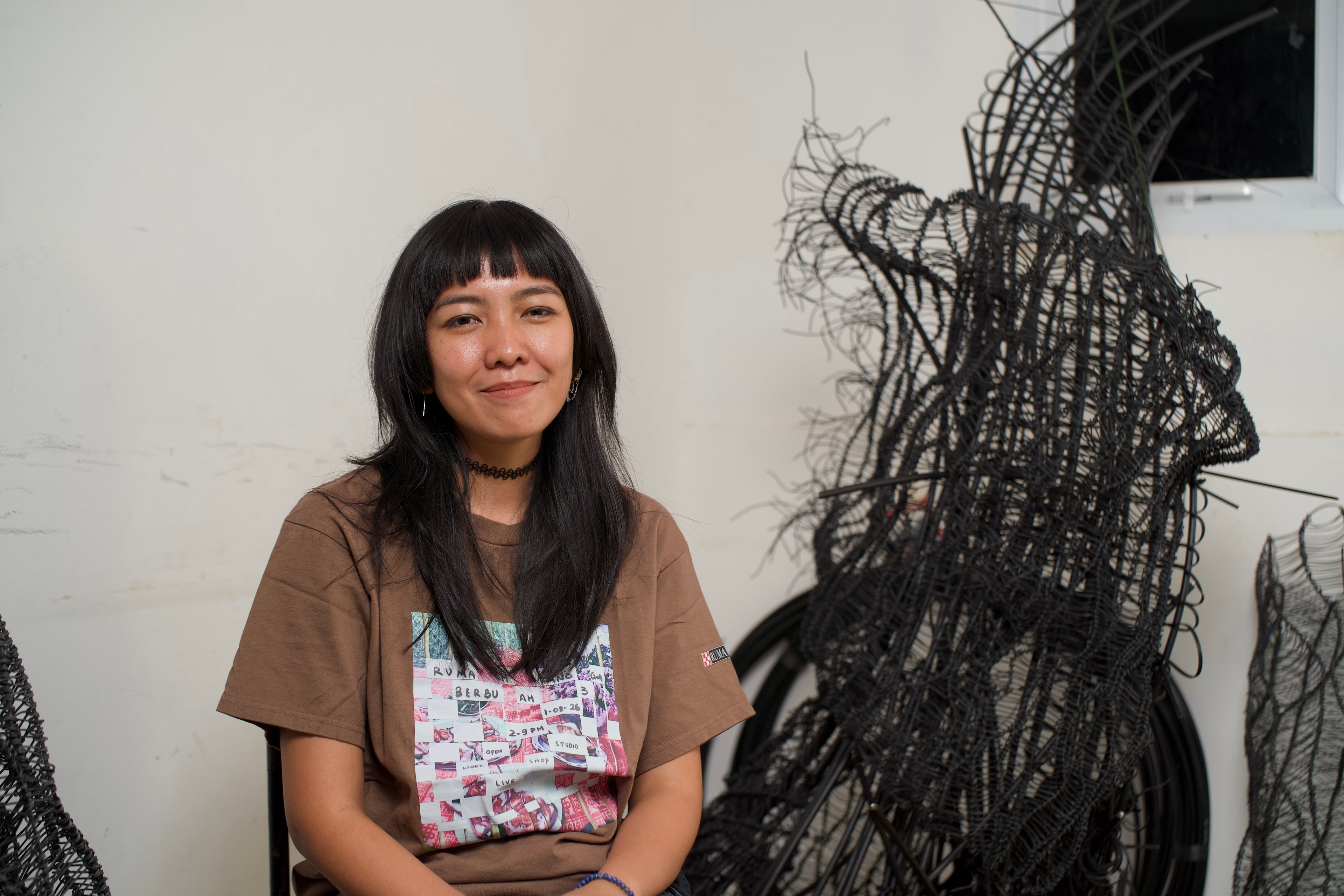
For Indonesian artist Agnes Hansella, discarded technological materials become avenues for building her own environments, deeply inspired by the natural world around us. Working with used cables, the artist knots, loops and layers them into tactile forests that resemble networks of vines, trees and canopies. At Art Jakarta this year, her installation extended this dialogue between nature and technology, urging us to pause and consider the fragile ecosystems around us that are under threat, and changing rapidly. In a conversation with the artist, we learn more:
ZA: Your work often transforms familiar or functional materials into something organic and sculptural. At a time in our world when recycling is paramount, how does this help convey your artistic vision?
AH: I like to think one of the highest achievements for a knotter like me, is the ability to knot anything (and I’m still learning). I want to be able to make something as long as the material can be knotted. With used cables there is already a tendency to curl a certain way, and that helps me get closer to that organic shape I'm after. I don’t feel like I'm starting from a blank slate, but instead continuing something that felt like it had ended.
ZA: It’s interesting to note that you have a background in sound engineering, prior to using macramé as your primary source of creation. There is a sense of repetition and waves that exists in both, and I was wondering if that interconnectedness is apparent for you as well?
AH: I do enjoy observing patterns very much. One of the reasons I left audio was that I was constantly in a state of listening to sound, and trying to figure out what it could be. Fridge noise for robots, whoosh, squeak, ambiences. I was unable to enjoy the moment anymore. While making audio for films, I have a need to control sound and keep it separate, and mostly away from human noise. But last year, after a friend told me that the lines I knot resemble audio waves, I had this realisation that they overlap with one another. I feel like after knotting, I see sound through a different perspective and have made peace with it.
ZA: Your artworks feel like pathways to your mind, mapping routes and tunnels into something deeper. How easy or challenging is it for you as an artist to execute your musings into an aspect that’s tactile?
AH: Sometimes, I see it very clearly, and at other times it changes. The knotting process is slow, so I adjust accordingly. And if I am lost, I start from a new corner, hopeful that they will connect somehow. They usually do.
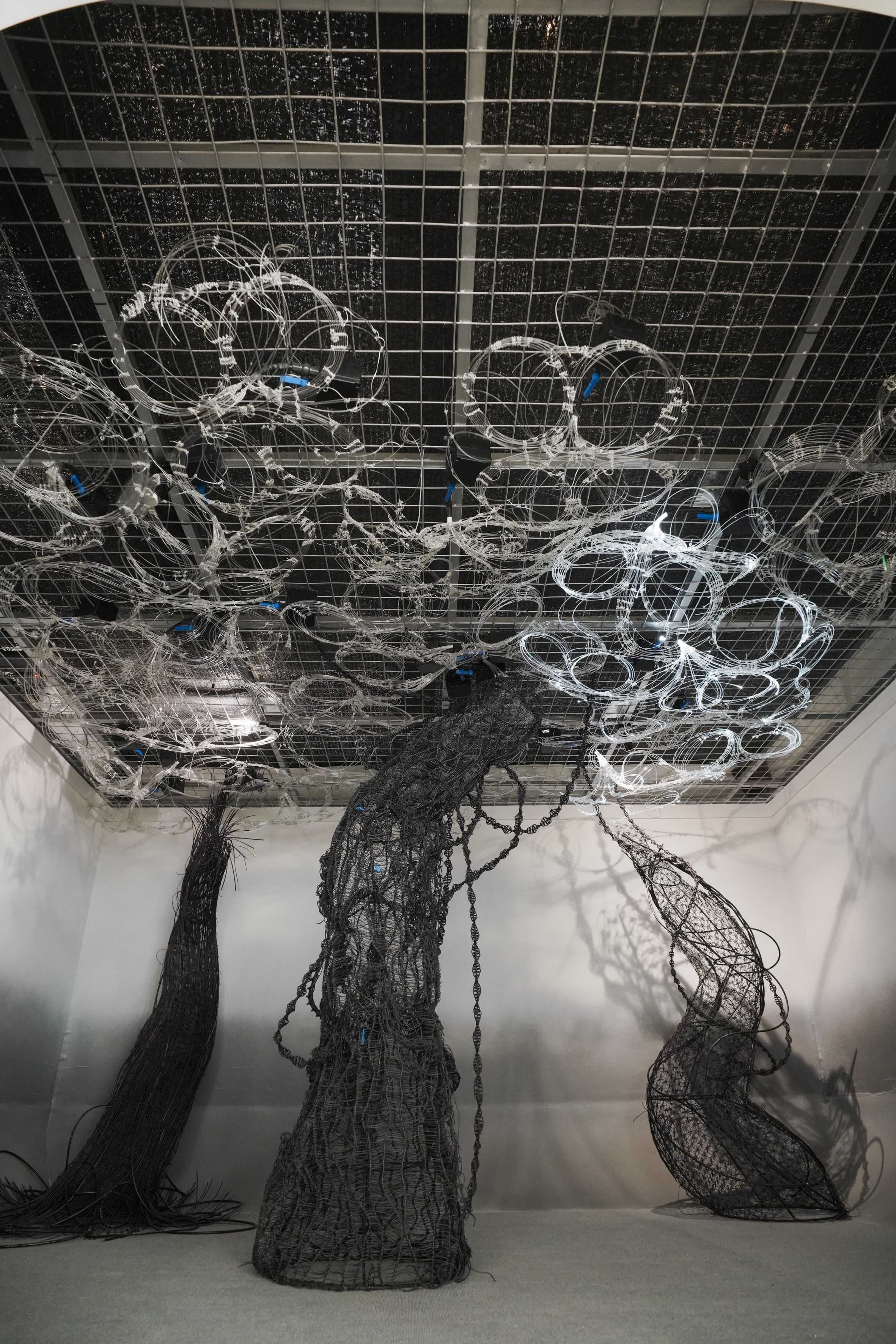
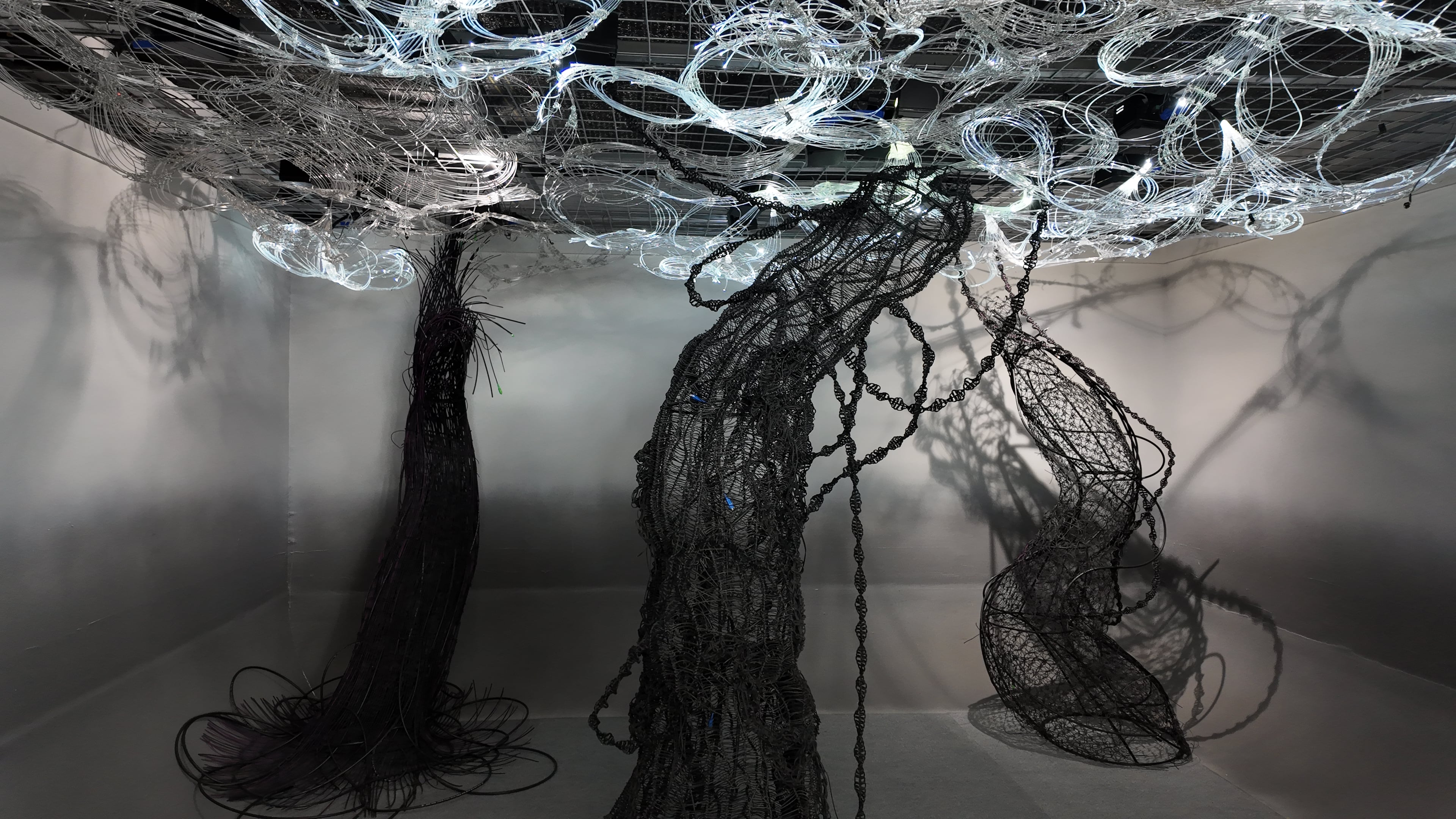
ZA: At Art Jakarta this year, your work Hutan Kabel which translates to ‘forest of cables,’ draws parallels between the growth of Ficus trees and the way cables occupy architectural spaces. What does this analogy reveal to you about nature and technology?
AH: The connection alludes to the mycorrhiza network. Humans are constantly chasing something, and want more of everything. We often mimic nature but only in some patterns. I think we need to stop moving and be still for a while. We need to have time to think about what we can do for nature. There are things that exist now that possibly won’t be there in the future. We can't survive if we don’t have the basics: air, water, and soil. So, after Art Jakarta, these arborescent cables can be put outdoors for vines to grow through it and create a whole new network.
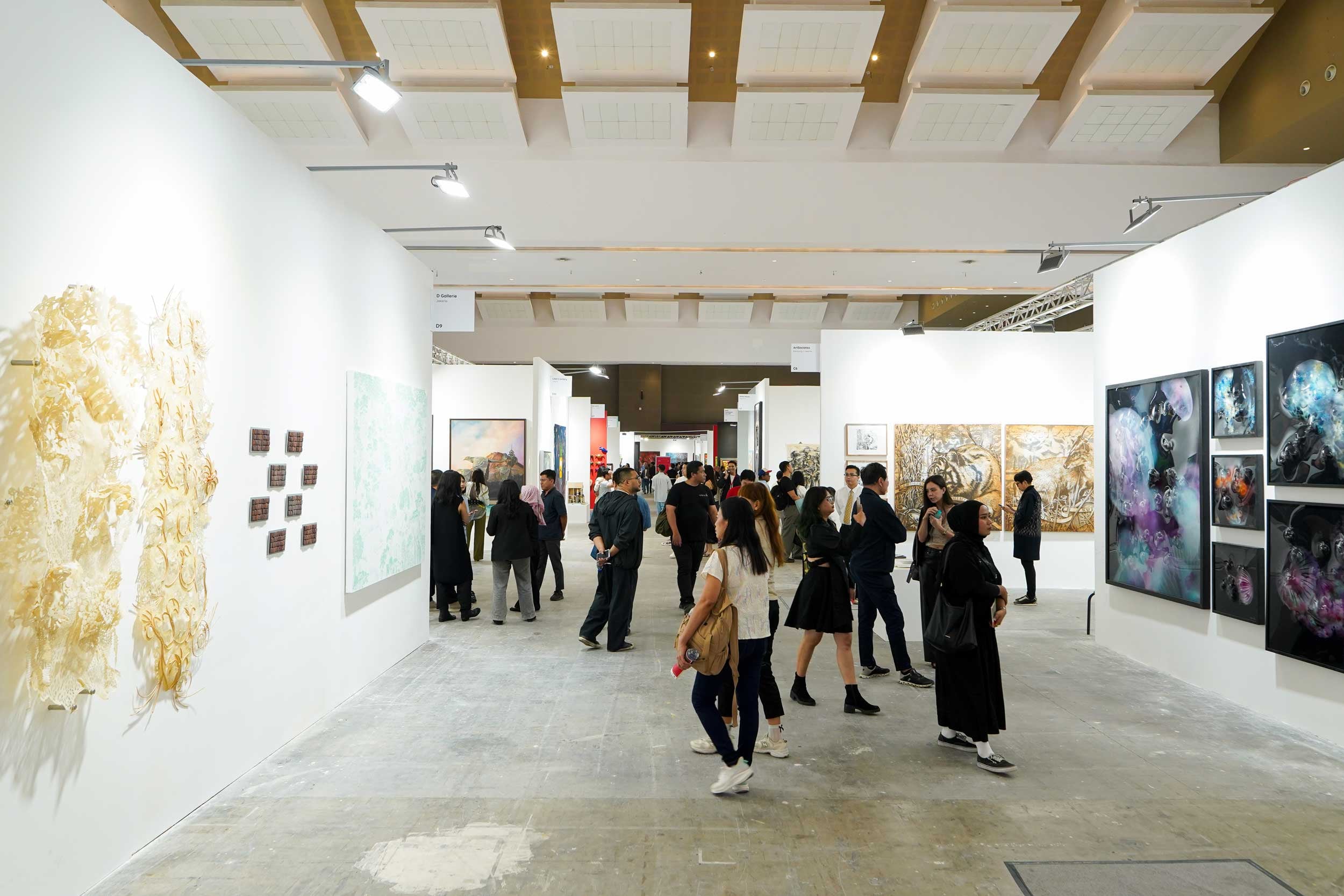
Art Jakarta 2026. Image courtesy of Art Jakarta.
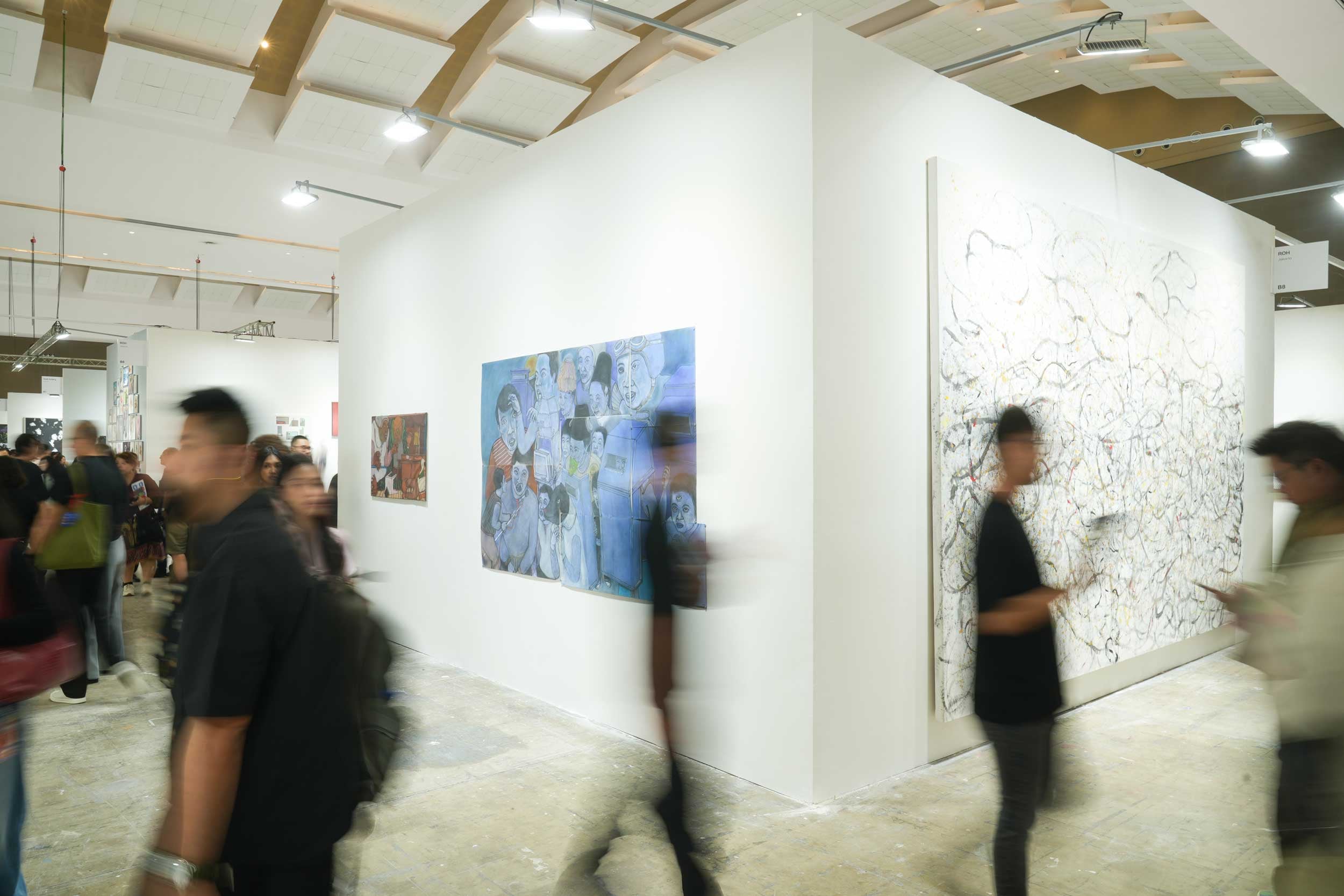
Art Jakarta 2026. Image courtesy of Art Jakarta.
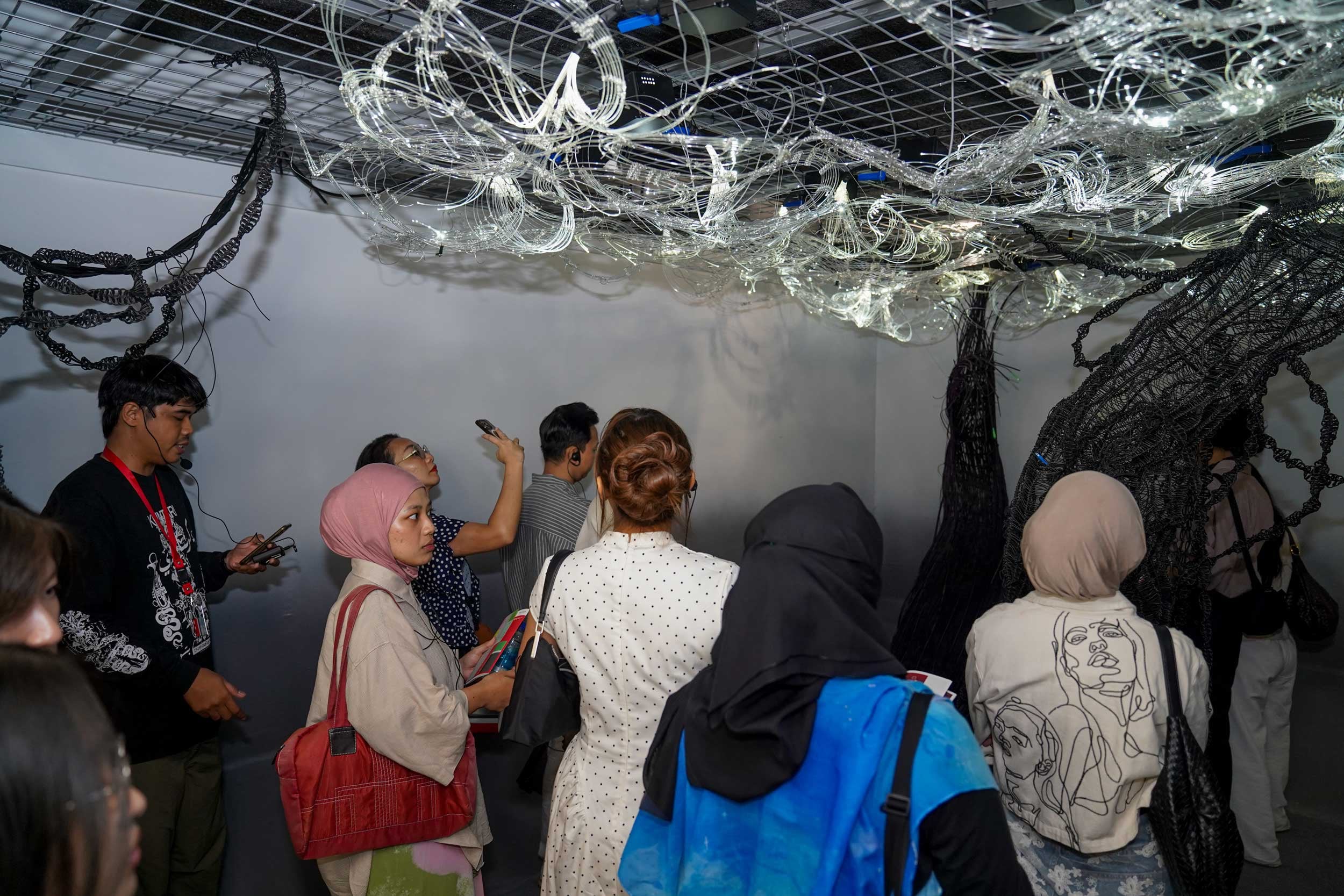
ZA: As visitors move through the room that houses your artwork, the piece responds dynamically in real time. Why was this live interaction important for the layering of this work?
AH: I want to lure the audience to walk through the room, exploring the knotted light and sensors above. As they move, the sensors will light up and trigger a “nguung” sound. If they stop (and all the other visitors stop too), they can listen to the sounds of the forest, which I took during my last homecoming. I also want the visitor standing at the entrance, to take-in the view of a crowd that's focused on looking upwards.
ZA: If we had to talk about the practicality of making these large-scale installations, could you break down your process and experience of it?
AH: I had an idea some time ago, a dream of a place that looked like a silhouette of trees. Also, I enjoy looking at vines growing through utility poles, and I wanted my knots to be like that. So, for the process of knotting, I learned by doing, and found out a lot of new things about cables. I make patches of square knots and hitches, and then combine them for my installations.
ZA: Is your engagement with nature primarily observational, or does it also carry a sense of memory and belonging?
AH: Sitting down in the forest feels like watching a dance. The trees remind me of gestures made during dancing. Limbs extending, arms stretching, with twines and twirls everywhere.
I remember going to the forest as a child, with my dad who is a priest. During one of his visits to the village, I was with him, and I was possibly five or six-years-old at the time. To get to the village, we needed to use boats, and it was quite dark. The bridge we had to cross made of round logs and felt wobbly, which made me uncomfortable, and I remember wanting to go home. But the next morning, one of the villagers took us to a lake to bathe, and the scenery was out of this world. The lake was crystal clear, and I could see all the way to the bottom, while we were surrounded by big trees. I took a swim there with my pyjamas. Last month, I went back home and tried to find something like that. But when I asked my friends where I could find big trees, they said it’s hard to find these days.