I am often intrigued by the way in which different artists visualise memory through abstract forms. What about memory triggers a structure in our mind that then flows onto a canvas, into a piece of music, or a sentence? For New York- based artist Kaveri Raina, her debut show in India acts as a thread that ties her childhood to her present. Of fire-harpoons that is ongoing at Experimenter, Colaba, in Mumbai, reflects Raina’s own journey - born in Delhi into a Kashmiri family and moving to the United States at the age of ten. Interestingly, the body of work draws inspiration from the mystic Kashmiri poet Lalleshwari (1320–1392), known as Lal Ded, who created the poetic style Vatsun or Vakhs, meaning “speech.” In this conversation, we talk about her process, the play of material and self, and Raina’s introspections and influences while creating her artworks.
I am often intrigued by the way in which different artists visualise memory through abstract forms. What about memory triggers a structure in our mind that then flows onto a canvas, into a piece of music, or a sentence? For New York- based artist Kaveri Raina, her debut show in India acts as a thread that ties her childhood to her present.
I’m often intrigued by how artists visualize memory through abstraction. What about memory forms structure in the mind that flows into art? For New York–based artist Kaveri Raina, her India debut ties childhood to the present.
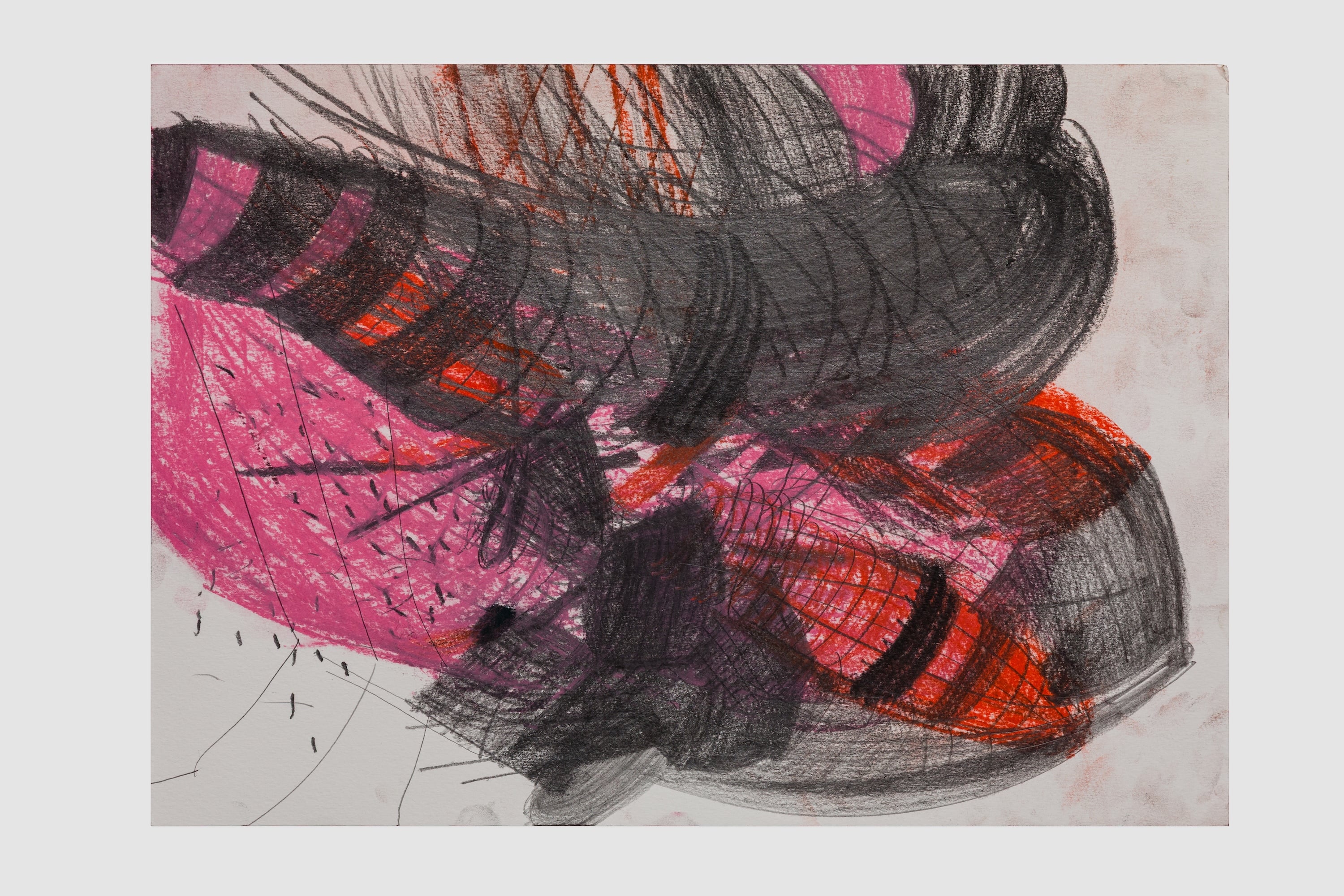
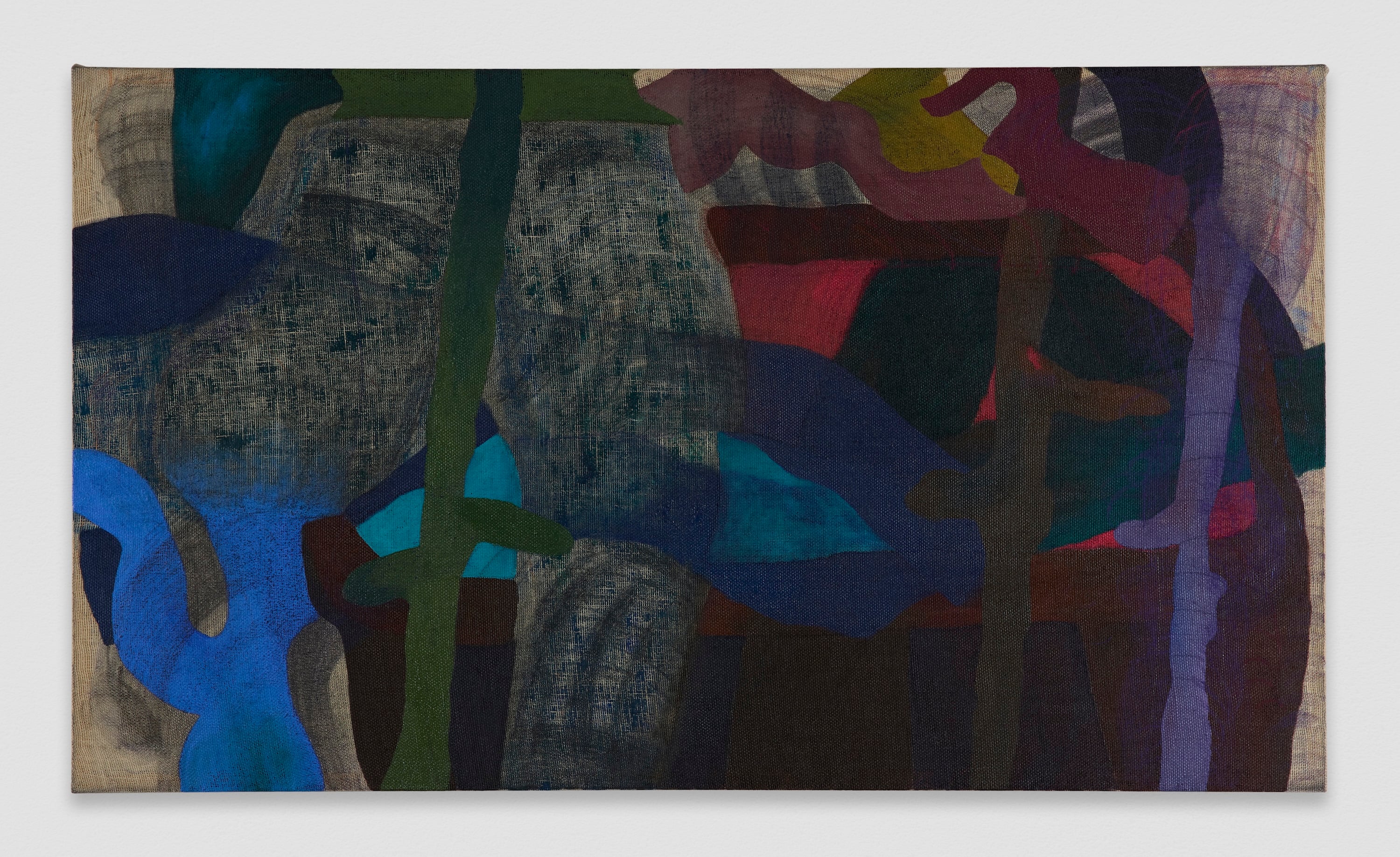
to find hidden self 16, 2025-2026, of fire-harpoons, Kaveri Raina.
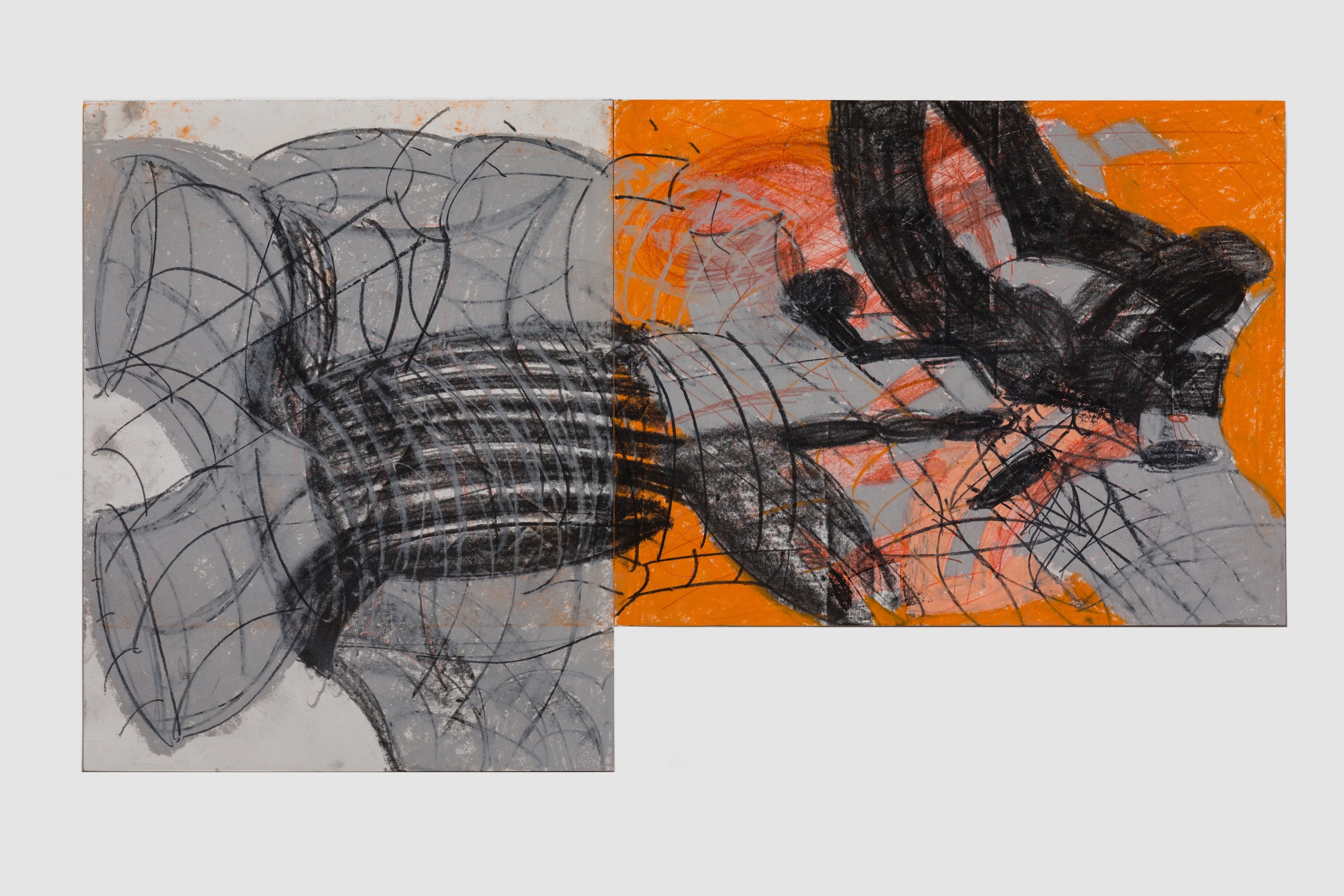
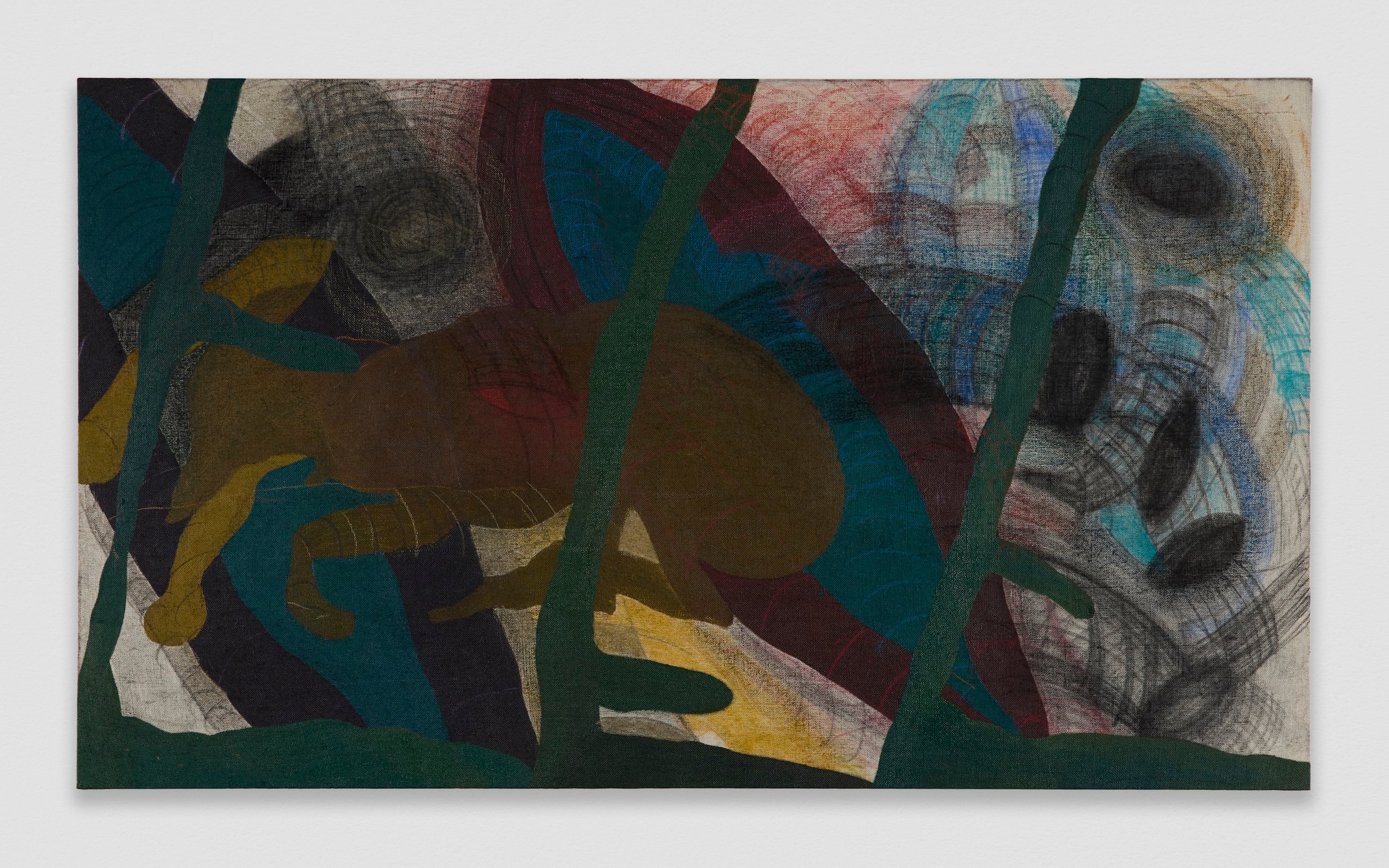
to find the hidden self 1, 2025-2026, of fire-harpoons, Kaveri Raina
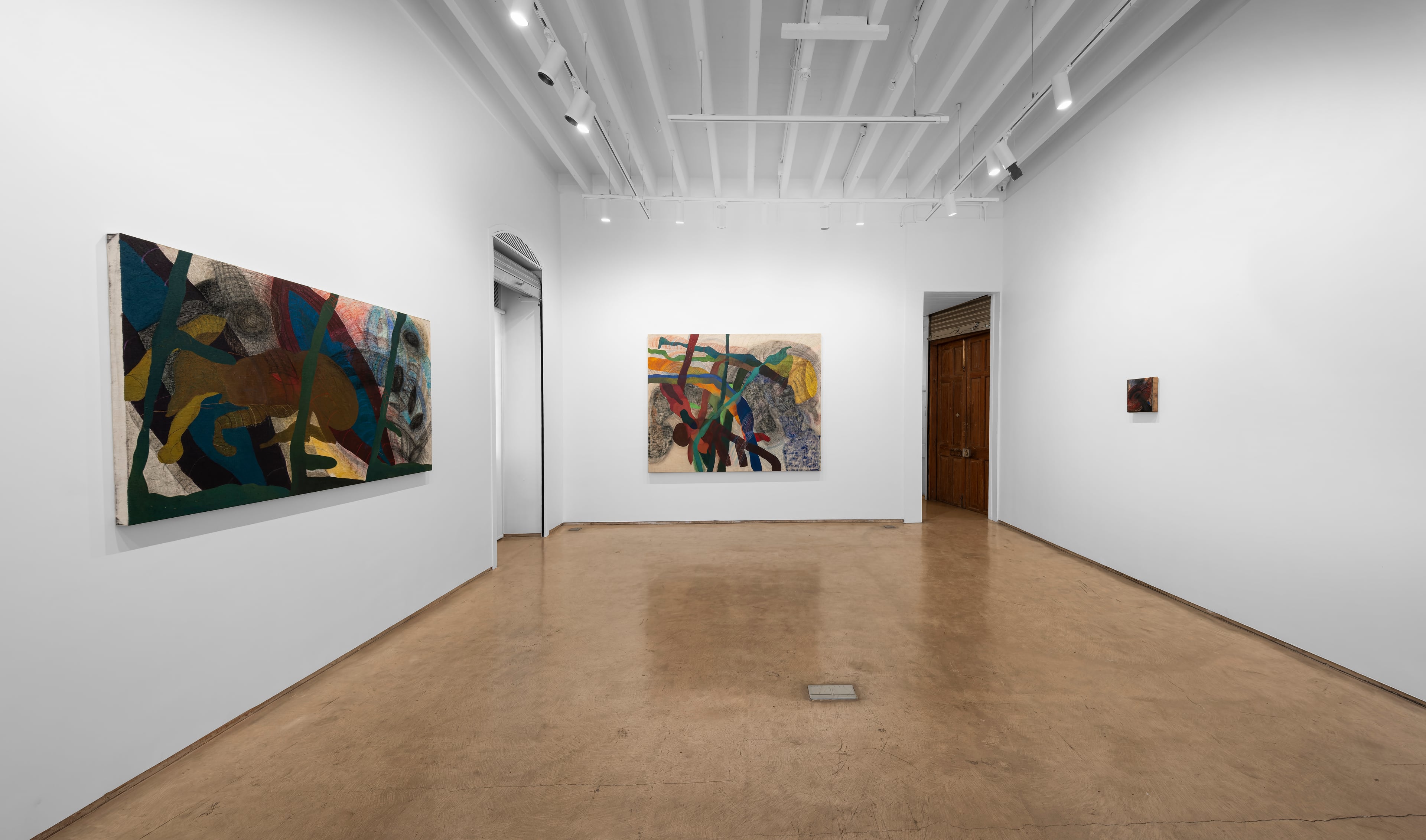
ZA: As I take-in the works across the gallery space, I notice a specific colour palette that’s consistent in all the abstractions. The patterns almost feel like the synapses in your brain, or a cosmic pathway connecting worlds. I was wondering how the work came about visually for you?
KR: This is my debut show in India, which has multiple elements that I’ve never done before. It feels like a mini-retrospective if I may say that, because it was made and thought through over a span of one and a half years - I tend to work slowly and consider each painting to be a chapter in a book. I need to work on one painting at a time, which also helps me time travel to the moment in my life when I was making it. Since it feels like a singular perspective, I also want the viewer to time travel themselves while standing in front of the work.
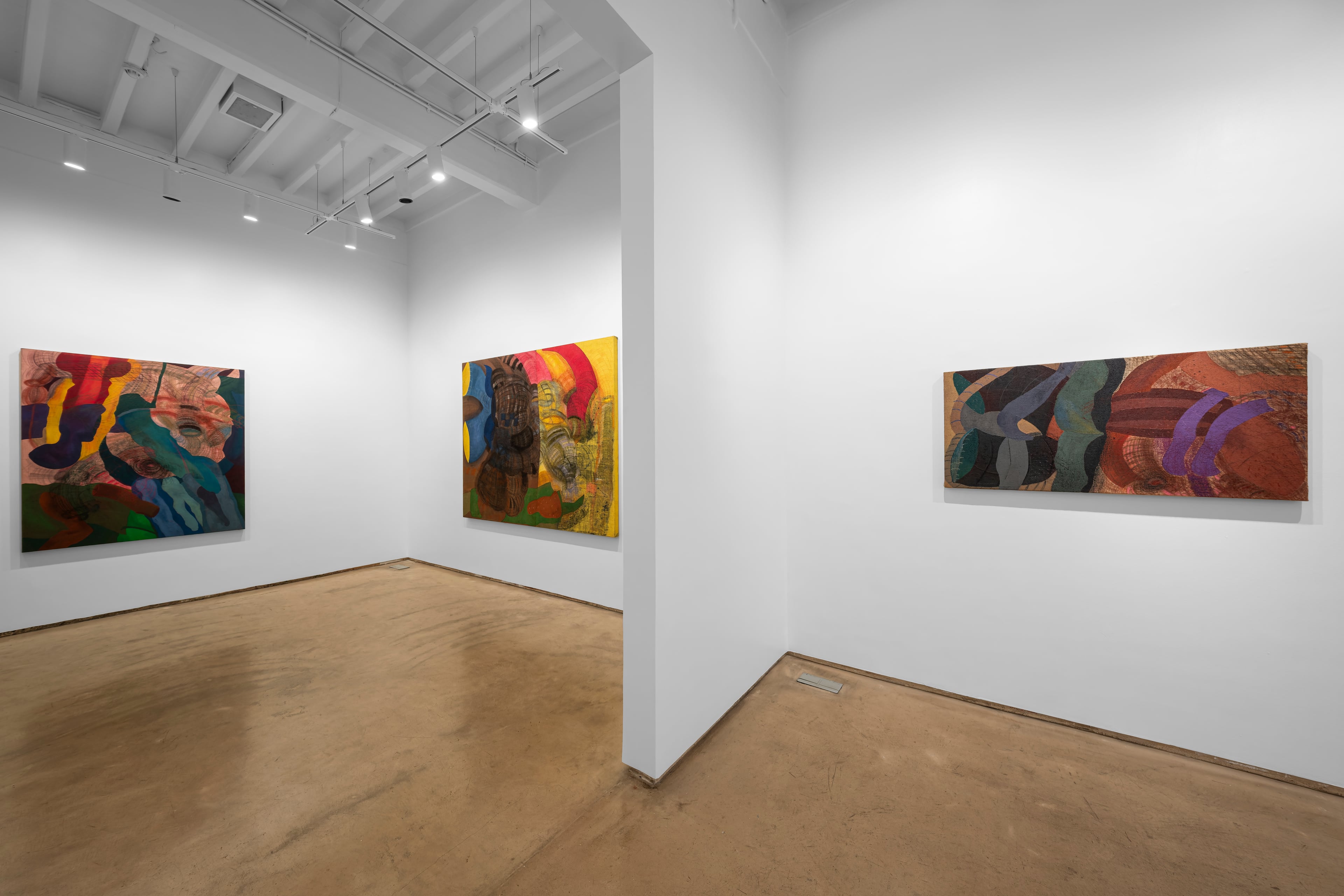
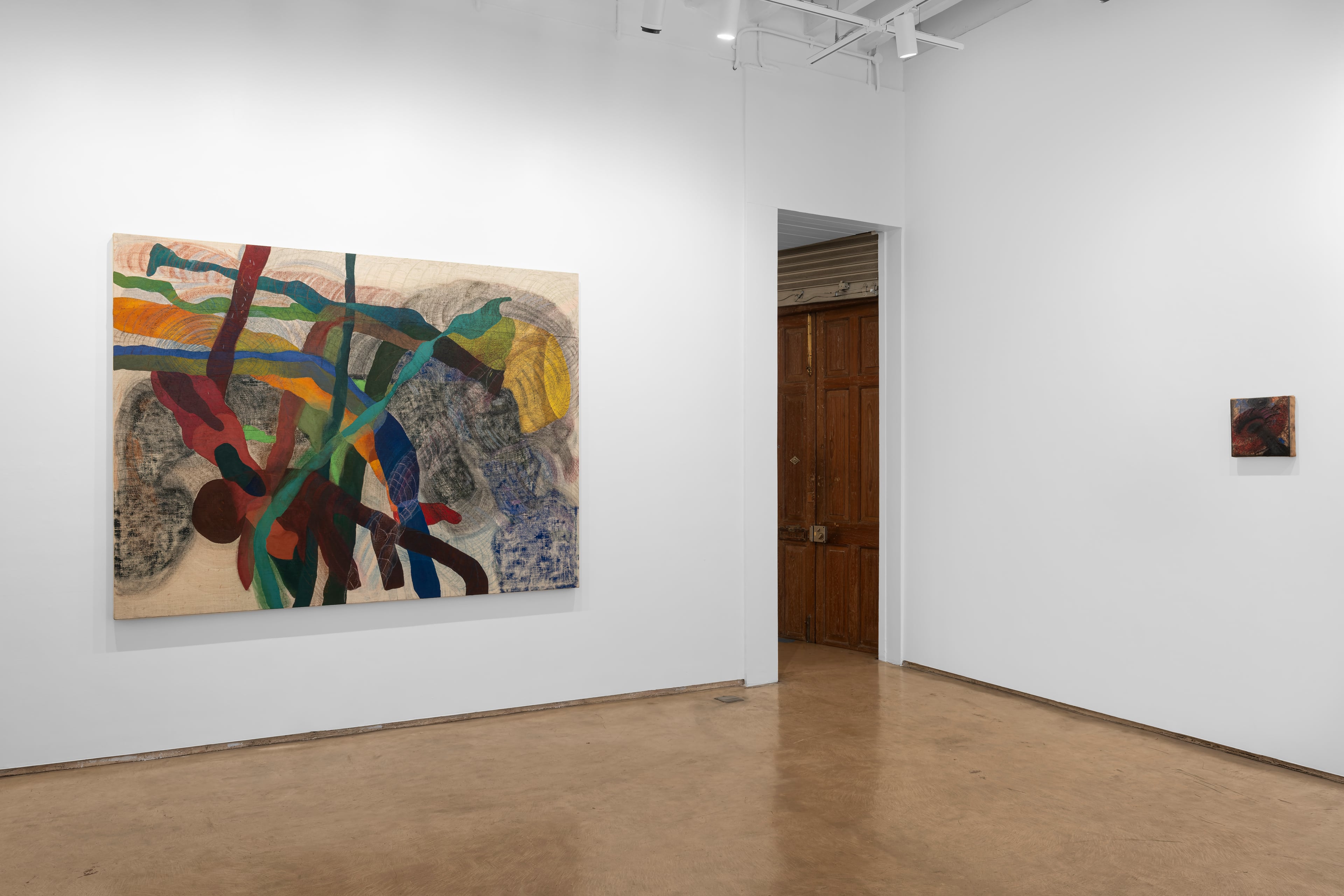
I’ve been painting on burlap since the past 15 years and it’s a very generous material. I usually give myself words to tackle a painting, and then spend time dedicated to that one emotion. In these works, I’m thinking of the word ‘excavating,’ quite a bit, or an ‘unravelling,’ of sorts . The repetition of colours that you see comes from the colours I used to see growing up in my mother’s kitchen. The residue of yellow from haldi [turmeric], the deep red from red chilli powder, or the brown of the fennel seeds, are all connections to the home environment which is very close to me. And being from Kashmir elevates this feeling because so much of our lives are spent strategizing what the next meal will be, or who we would like to invite next.
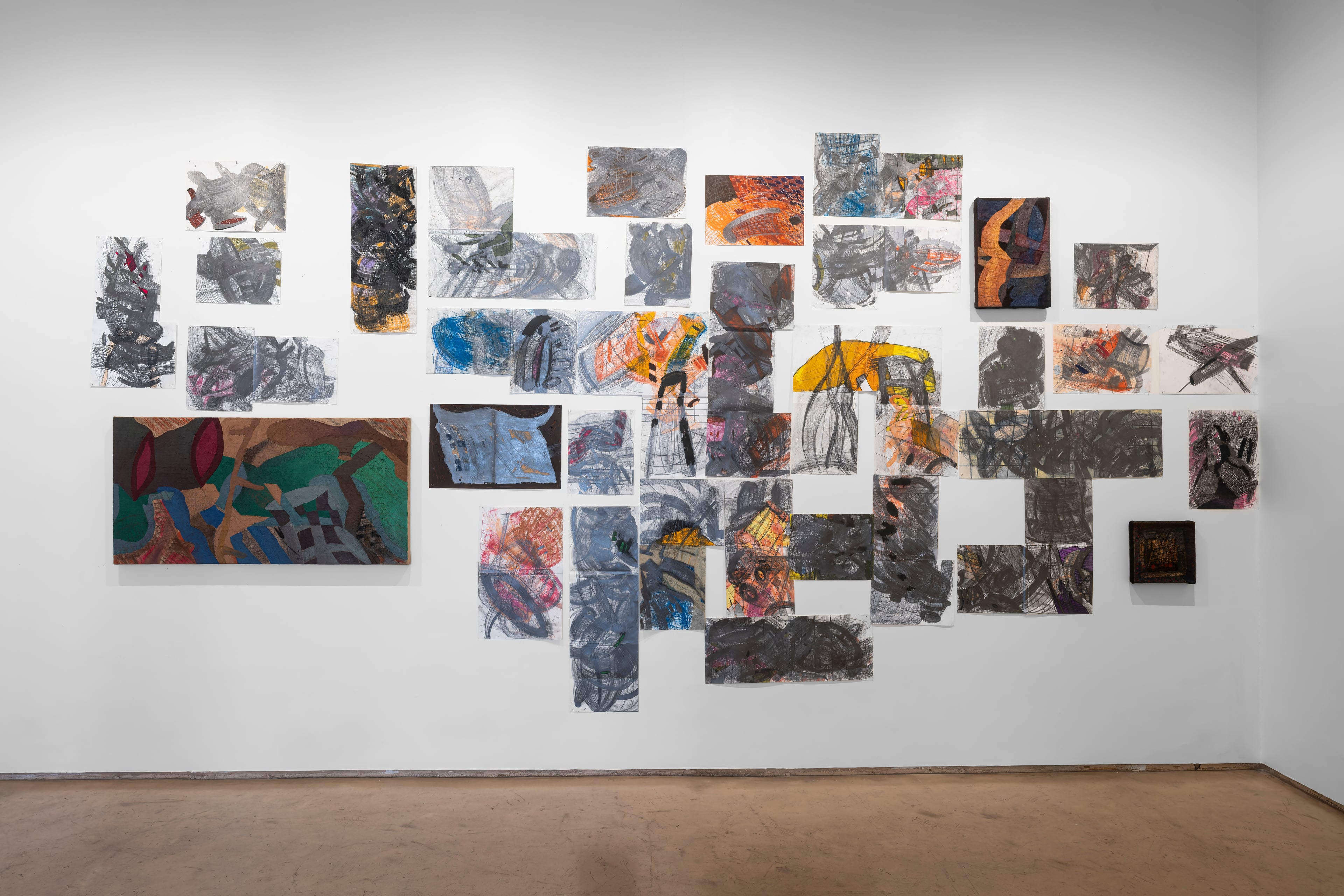
of fire-harpoons, Kaveri Raina at Experimenter, Colaba, India.
of fire-harpoons, Kaveri Raina at Experimenter, Colaba, India.
ZA: This brings me to the title of the exhibition of fire-harpoons, which is an excerpt from Ranjit Hoskote’s translations of 14th century Kashmiri mystic Lal Ded, also endearingly known as Lalla. In her essay about the show, writer Upasana Das mentions how you were struck by Lalla’s poems when the volume was mentioned by your father in reference to his memories of your grandparent’s. You picked it up and used it as a base to create this body of work at Experimenter. I wanted to understand what about this poetry stayed with you?
KR: Yeah, Lal Dedis a name that was mentioned often while growing up, and a figure that my grandparents used to mention often.She was highly unconventional for her time because she didn’t bother about religious distinction, which is why people from all religions really resonated with her. Of course she was also neglected and shunned, and became an outcast because of this, but it was the crux of her poetry. Growing- up, her poems were sung out loud in this lyrical way that Kashmiris recite, and at that point I wasn’t thinking of them with the depth with which I do now. When my father mentioned her work again, I made it a point to read a few of her poems everyday at my studio in New York, and realised how so many of them had double meanings.
We’re so multifaceted as human beings, and her words began to feel like she, too, is constantly in search of herself, or looking for an environment where she is accepted. Since this was my debut show in India, and felt like a sort of homecoming, this was my homage to being back here. I also find multiple circular motions in my work, and I think it stems from this feeling of constantly circling around something, but not necessarily landing on anything.
ZA: It’s interesting that you’re inspired by poetry, and your own captions feel like verses themselves. For instance, one of your works is titled ‘wrestled with a lion, now levitating, 2025.’ Is this idea of captioning in lyricism interconnected toLal Ded’s poetry?
KR: For me, words are extremely important. Whether it’s Lalla’s words or otherwise. So yes, the titles in these works are collaged with her words, and finished by my interpretation of an emotion once I complete a painting. For instance, in mum howls: stillness even in a rampaging wind, 2025, I held onto the visual the words ‘rampaging wind,’ that arrived from Lalla’s poetry and then painted that feeling.
Much like when you look at American sculptor Lee Bontecou’s work, the sculptures feel like they are coming at you. They usually have a window with black fabric, but when you look inside, there is ‘nothing,’ and at the same time, it feels like a lot. Her work is very self-reflective in that sense, and I want my circular motions and shapes in my drawings to behave much like these portals or vessels.
wrestled with a lion, now levitating, 2025, of fire-harpoons, Kaveri Raina.
mum howls stillness even in a rampaging wind, 2025, of fire-harpoons, Kaveri Raina.
of fire-harpoons, Kaveri Raina at Experimenter, Colaba, India.
ZA: You mentioned that you’ve been using burlap since the past 15 years. The coarseness of the material makes viewing the work in person rather essential for a true reading into your practice. What makes you stick with the material? And do you find merit in the repetition?
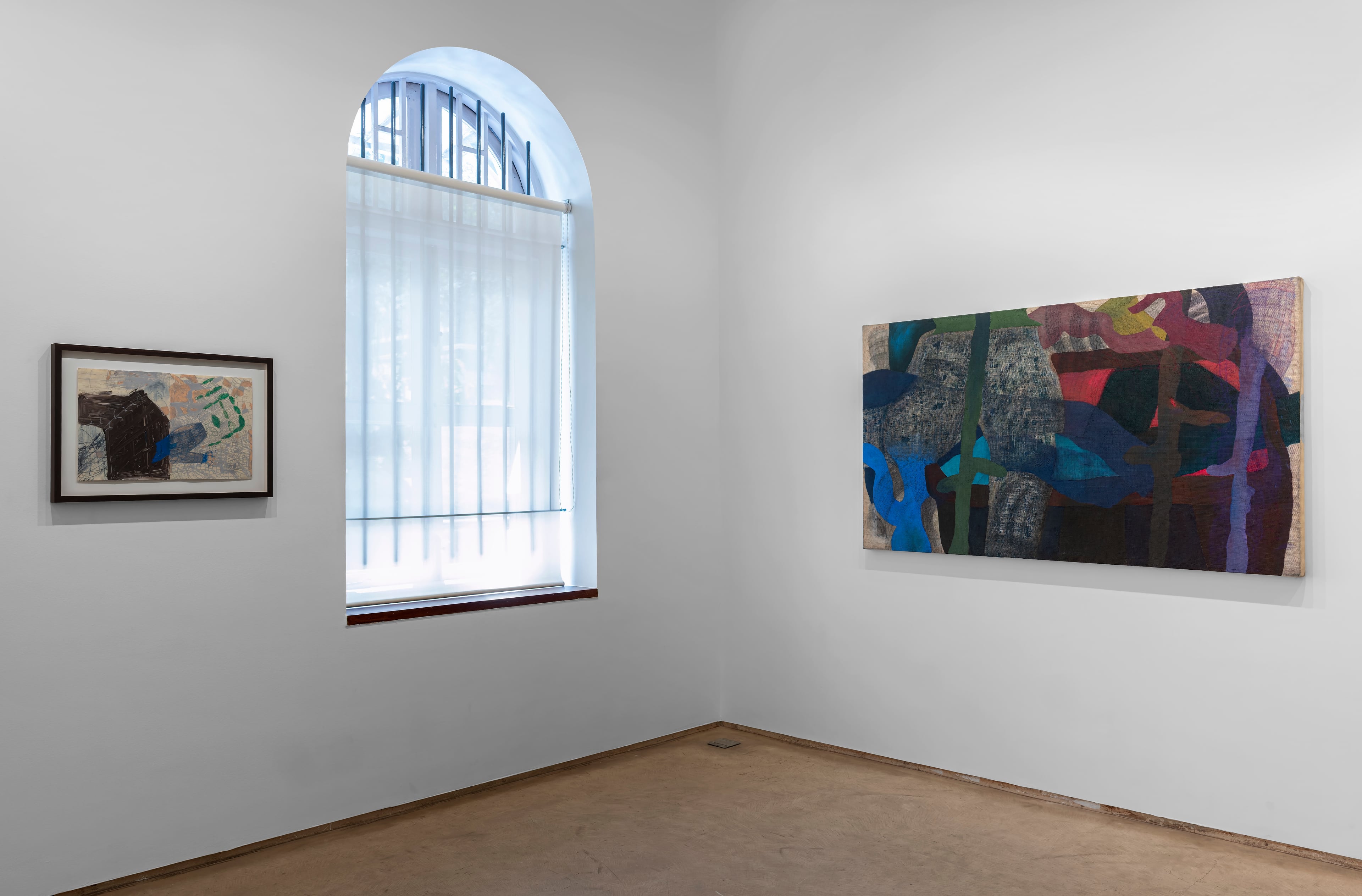
KR: I’ve grown-up seeing thematerial around me and how it takes the shape of whatever it holds. Whether it’s rice, or otherwise. I first began working with it in my studio during graduate school in Chicago, and experimenting with haldi and red chilli powder as mentioned before to see what happens. When I stretched out the whole table with the material, I realised how porous and permeable it was, and that it allowed me to paint from the back. I’m an extremely process-oriented painter, and my practice is influenced by how I’m feeling. I really enjoyed moving around the burlap and seeing how it shifted and changed with my own body, which almost made it feel like a part of me. When I placed it horizontally, it created a beautiful long landscape, and when positioned vertically, it felt like a doorway or a portal. The next semester, I decided to respond to it from the front as well, so it became this back-and-forth dance performance in my studio that influenced the work as well.
Once I moved to New York in 2018, the addition of charcoal, graphite, oil pastels, and oil sticks came into play, and I wanted the conversation to extend not only to the material, but also what the material was helping me achieve, and that’s when my work became more figurative. I stay with it because it continues to surprise me. For instance, the burlap I used in Kolkata recently was more pleasant to paint on because it was softer, whereas the burlap I get in New York is thicker, and hence changes the layers that I use. The work never quite feels the same.
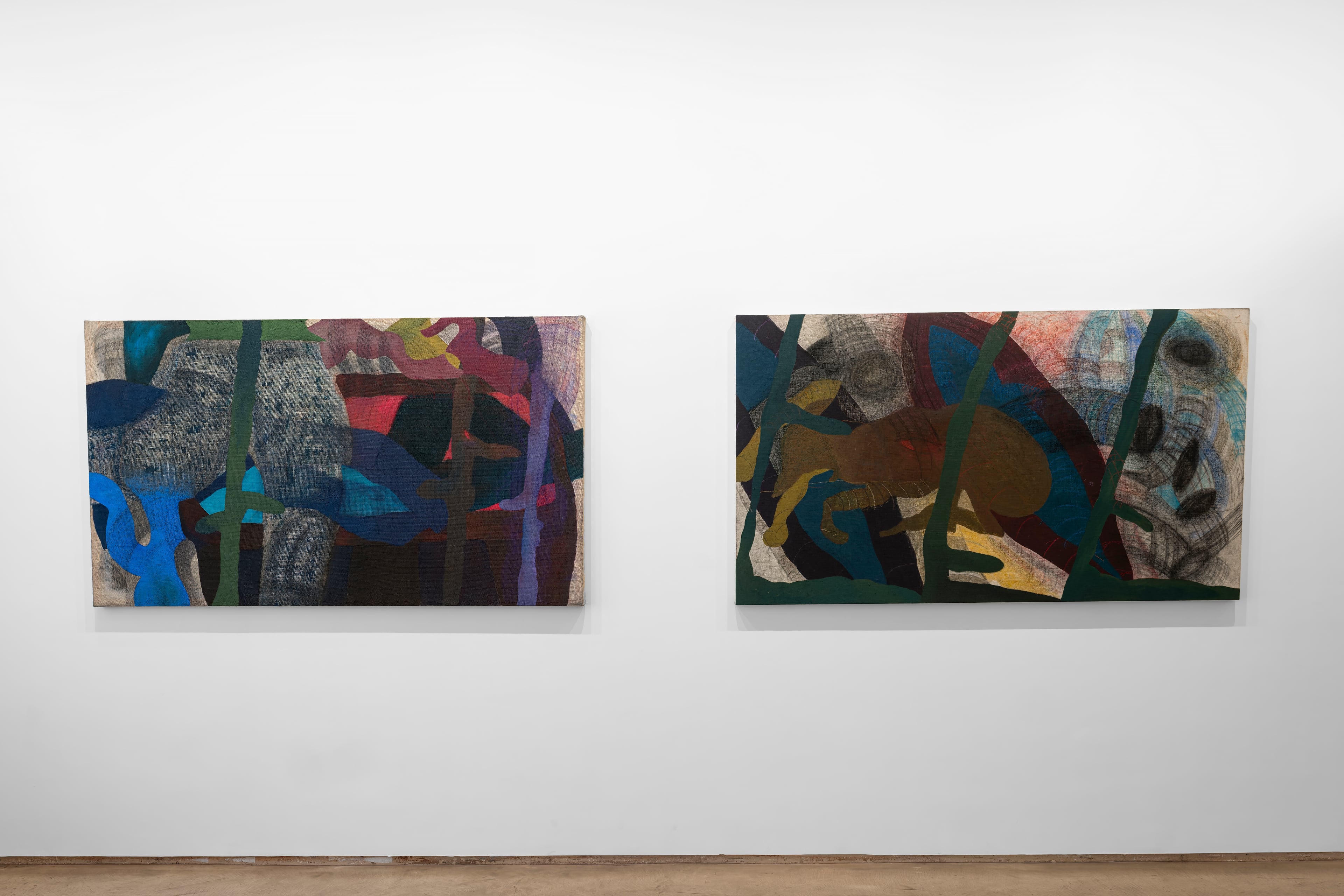
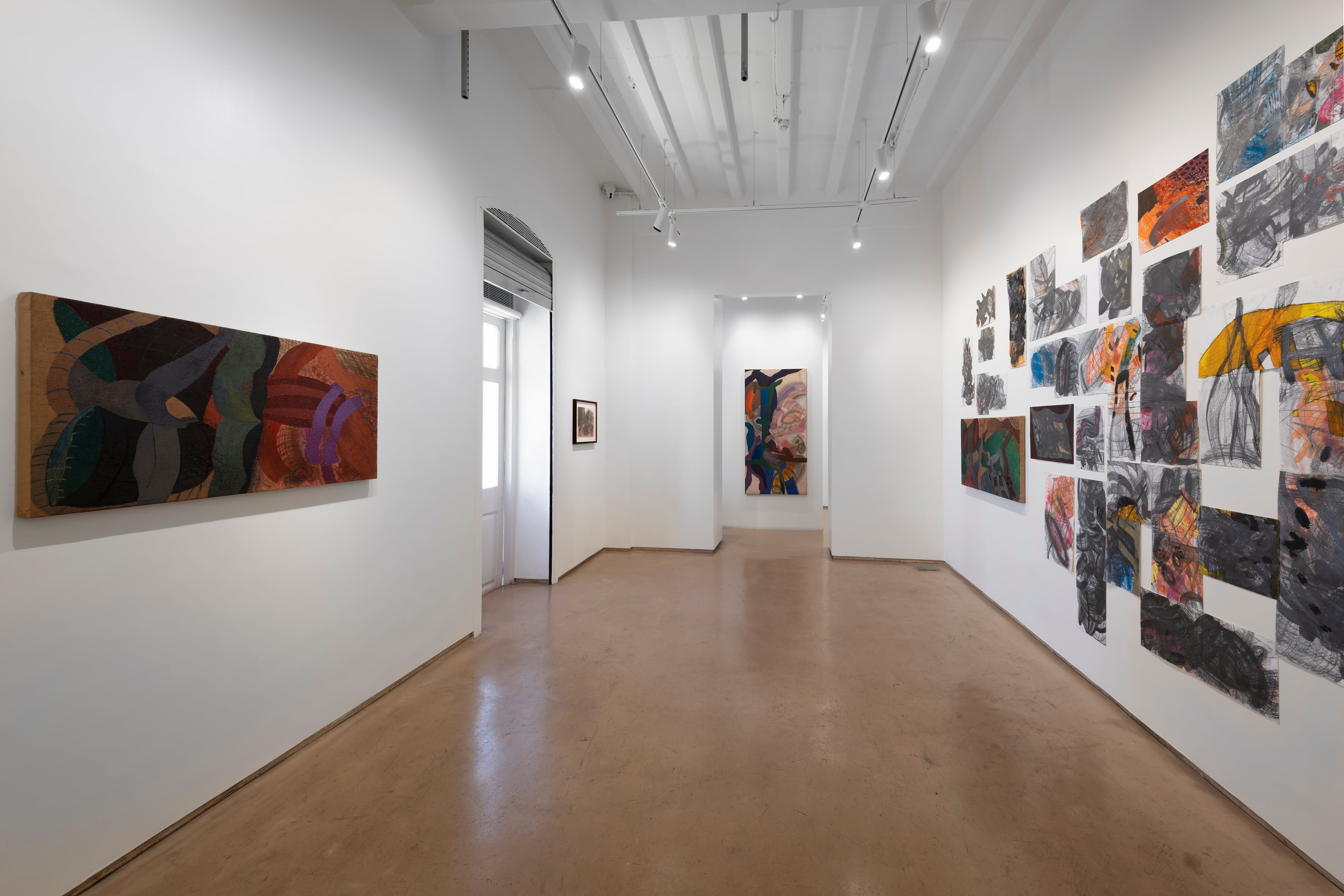
of fire-harpoons, Kaveri Raina at Experimenter, Colaba, India.
of fire-harpoons, Kaveri Raina at Experimenter, Colaba, India.
of fire-harpoons, Kaveri Raina at Experimenter, Colaba, India.
ZA: While looking at your paintings, they seem continuous in a way that the elements reoccur, finishing a thread that had begun in another. As the creator, are the conversations between them deliberate, or are they more subconscious?
KR: That’s a great question. There is a wall in my studio in New York that is the drawing wall, that is opposite to the painting wall. In fact, the show at Experimenter replicates this as well. The drawing wall is used for image invention, and spur of the moment thoughts. I often give myself questions such as “what does it mean to be suspended?” “What does it mean to be held?” “What does it mean to be silent?” and so on, which allow me to come up with images as answers. Through the drawings, my paintings develop. Since the summer of 2017, my works have a recurrent image of a long person holding onto a long creature that I drew simply with a sharpie on a piece of paper. Over time, I have repeated this visual through shapes and different contexts. The colours of the burlap differ according to the time frame and mind frame that I’m in, even though there is repetition in the symbols. So, to answer your question, the works are definitely speaking to each other, but it isn’t a deliberate curation or sequence.
In fact, it was only during my install at Experimenter with Priyanka that I first saw all the works sitting together. And that’s when I realised that the paintings had very similar gestures, and much like in a book, the chapters had to make sense to move forward, whether through resolutions or questions.
Of fire-harpoons is on at Experimenter- Colaba, Mumbai until April 18, 10.30am to 6.30pm, Tuesday through Saturday.