It was a quiet September in the middle of 2020, a year that has been imprinted in our anecdotal histories.
It was a quiet September in the middle of 2020, a year that has been imprinted in our anecdotal histories.
It was a quiet September in the middle of 2020, a year that has been imprinted in our anecdotal histories.
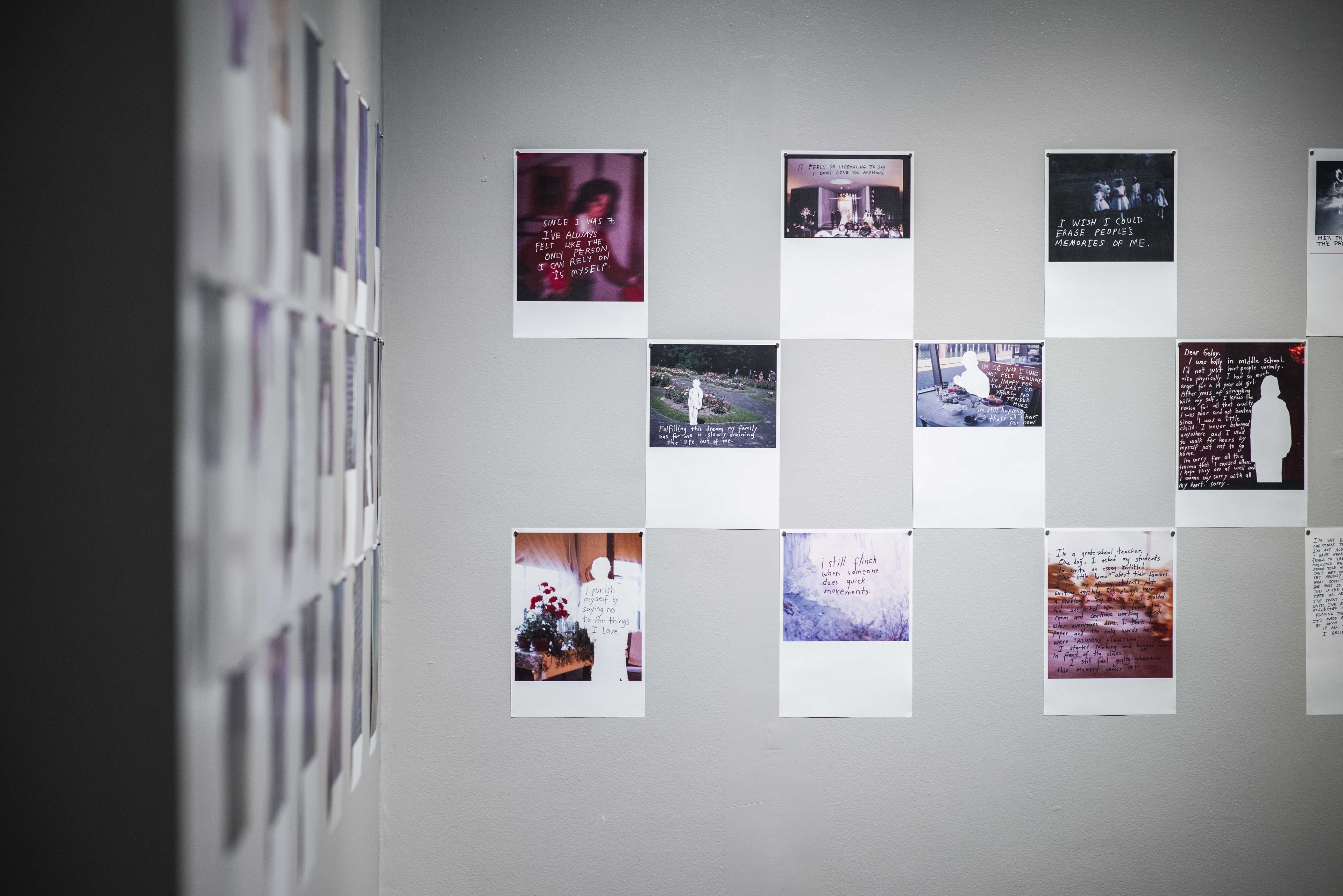
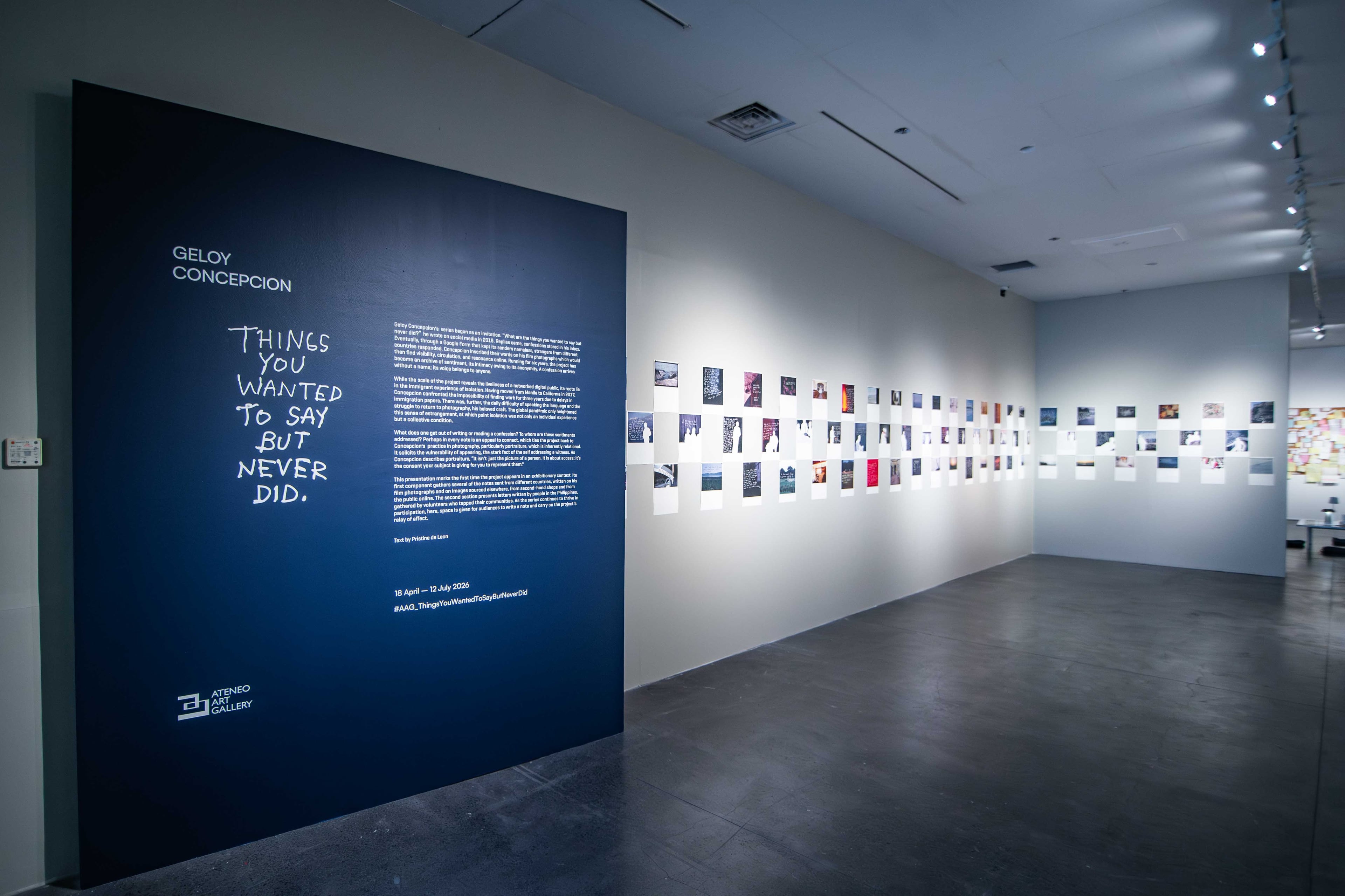
Installation view of Things You Wanted to Say But Never Did on view until 12 July 2026 at the Ateneo Art Gallery. Photo by Reeltime Photography, courtesy of Ateneo Art Gallery.
As I lay in my bedroom in Bombay, India, and scrolled through Instagram, a significant portal for worldwide communication at an isolated time, I remember seeing a striking photograph with handwritten text- almost childlike in its form. The words stretched across the image in a legible and almost painful confession- “I wish I could choose the memories that stay.” It was a message that resonated deeply and painted my own version of memories, as if it were a prompt for a larger truth.
As I scrolled through the handle named @geloyconcepcion , I realised that his feed was full of weighted but relatable messages that lay side-by-side across a grid, serving as a collective diary. As time went on, the Philippine-born artist Geloy Concepcion’s work gained traction, and ultimately, he published a book of these confessionals titled Things You Wanted to Say But Never Did: A Photographic Journal to Process Your Feelings. The sensitive and empathetic work recently found a new form in an exhibition in Manila at Ateneo gallery, seeing thousands of visitors everyday. In this conversation with Arttaca, Concepcion reflects on loneliness, anonymity, and the power of making room for thoughts that cannot always be spoken.
ZA:Recently, you were on the cover of Rolling Stones Philippines, for their Voices issue that highlights Filipino storytellers who amplify national concerns and push their industries forward. It’s so interesting to see how the power of collective voice and empathy has been achieved through a sense of complete anonymity in your internationally acclaimed project- Things You Wanted to Say But Never Did. Before we speak about the work, I’d like to know how this journeythat has now resulted in a cover, has shifted your photographic process and perspective?
GC: Well, while in Manila, I started off as a graffiti artist before I transitioned to photography. But even while I engaged in street art, there was always a humanistic element in the scenes I painted. It’s probably why I was so surprised that I would eventually make a photographic project where I’m not physically talking to someone or making their photograph. But I think part of my approach within photography, has been about adjusting and reacting to my situation.
When I got to the US from the Philippines in 2017, I was unemployed for three years because of a delay in immigration papers. It resulted in me spending large amounts of time at home, in a pre-pandemic world, when we weren’t as exposed to isolation. I craved connecting with people, and it resulted in me putting out the question “What are the things you wanted to say but you never did?” on my Instagram stories one month before the pandemic hit and got quite a few responses. Then, when the whole world was isolated, this really picked up and it propelled the project to a place I couldn’t even imagine.
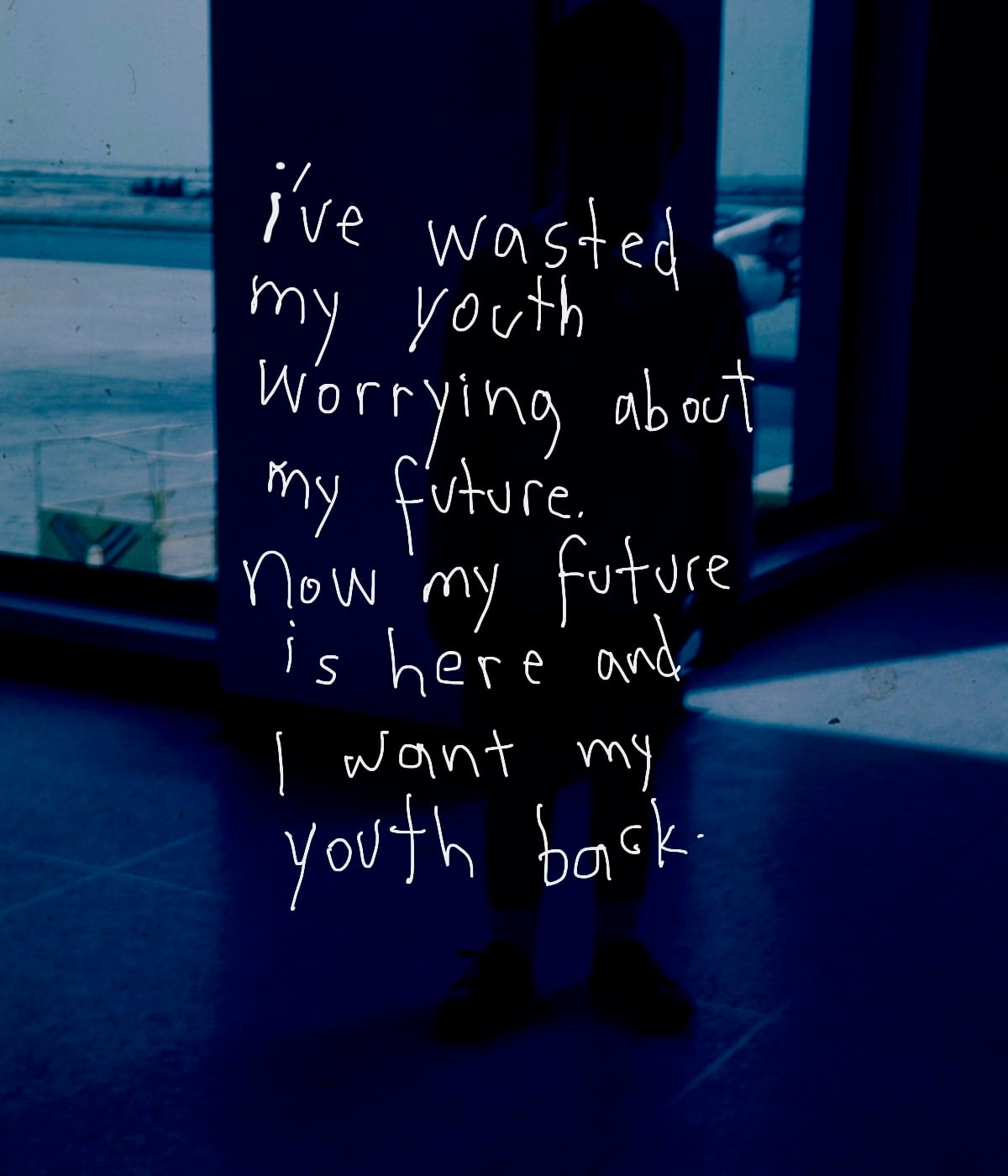
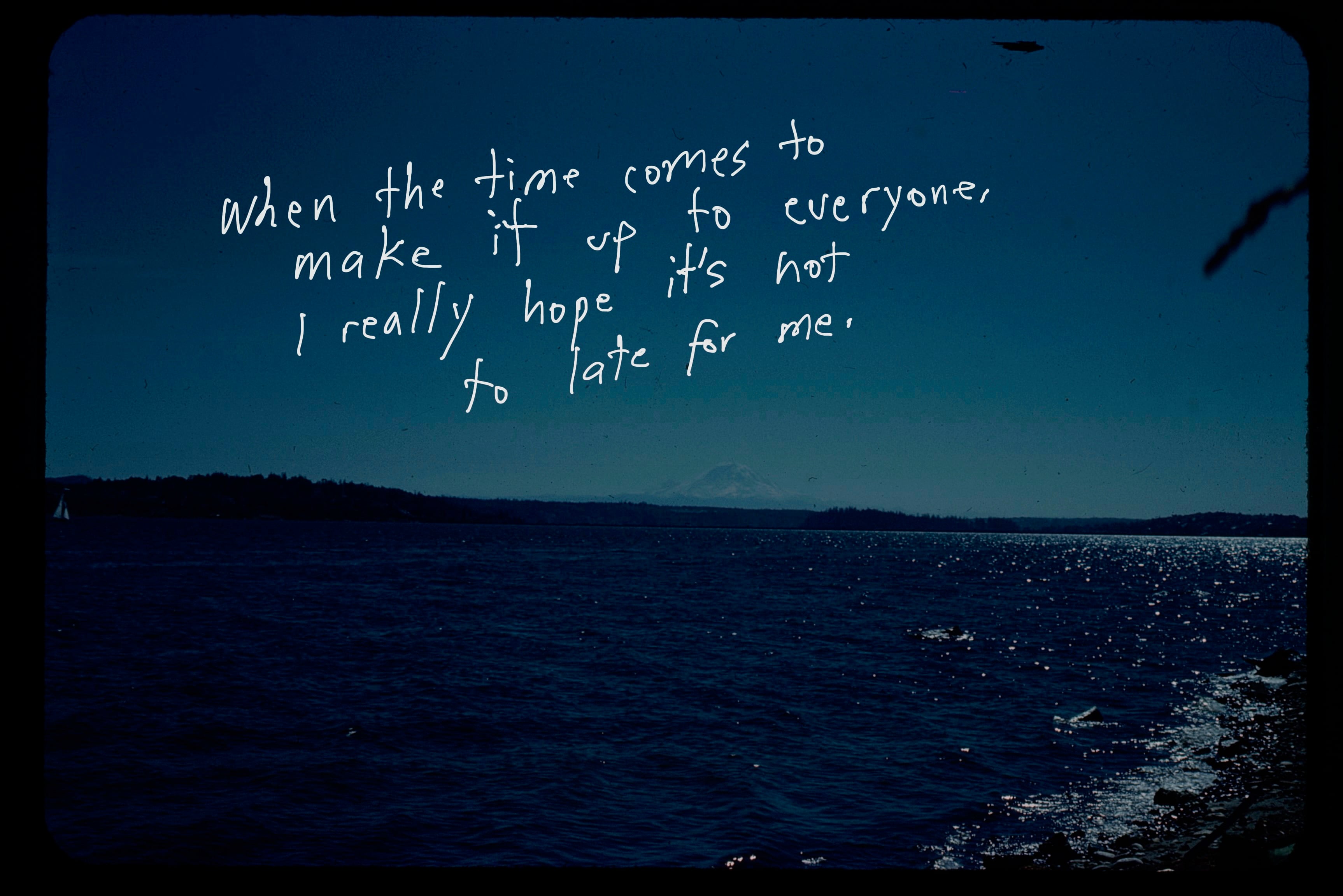
Geloy Concepcion, From the series Things You Wanted to Say But Never Did (2019–present), Photograph with text. Courtesy of the Artist.
ZA:I read in multiple interviews that the question that you posed on your social media was supposed to be a final ode to photography before you gave-up and tried something different. Now, it almost feels like the project went where it did in a bid for you to stay. Could you speak more about the urge to let go off photography and how the overwhelming response to this question nudged something within you?
GC: I would love to think that it was the medium’s way of making me stay; but it was essentially me trying one last project in the midst of a pandemic when going out and making photographs wasn’t an option. I still remember my first few messages that were simple, and single sentence responses such as “I am adopted,” or confessions such as “I’m having an affair.” Everything changed when I received a message from somebody who said “Today is the day I planned to take my own life, but I saw your project and decided to postpone it. I just want you to know that you saved my life today.” The minute I read that, I realised that the project was much larger than me, and far beyond my control. Any ego I had attached to it being my creation was now released. And I realised that this belongs to the community and it will live years longer than me. It made me feel like I wasn’t the author, but merely the channel.
ZA:The visuals and text are so integral to the existence of one another in your work. How do you arrive at a final artwork that speaks seamlessly while curating the responses?
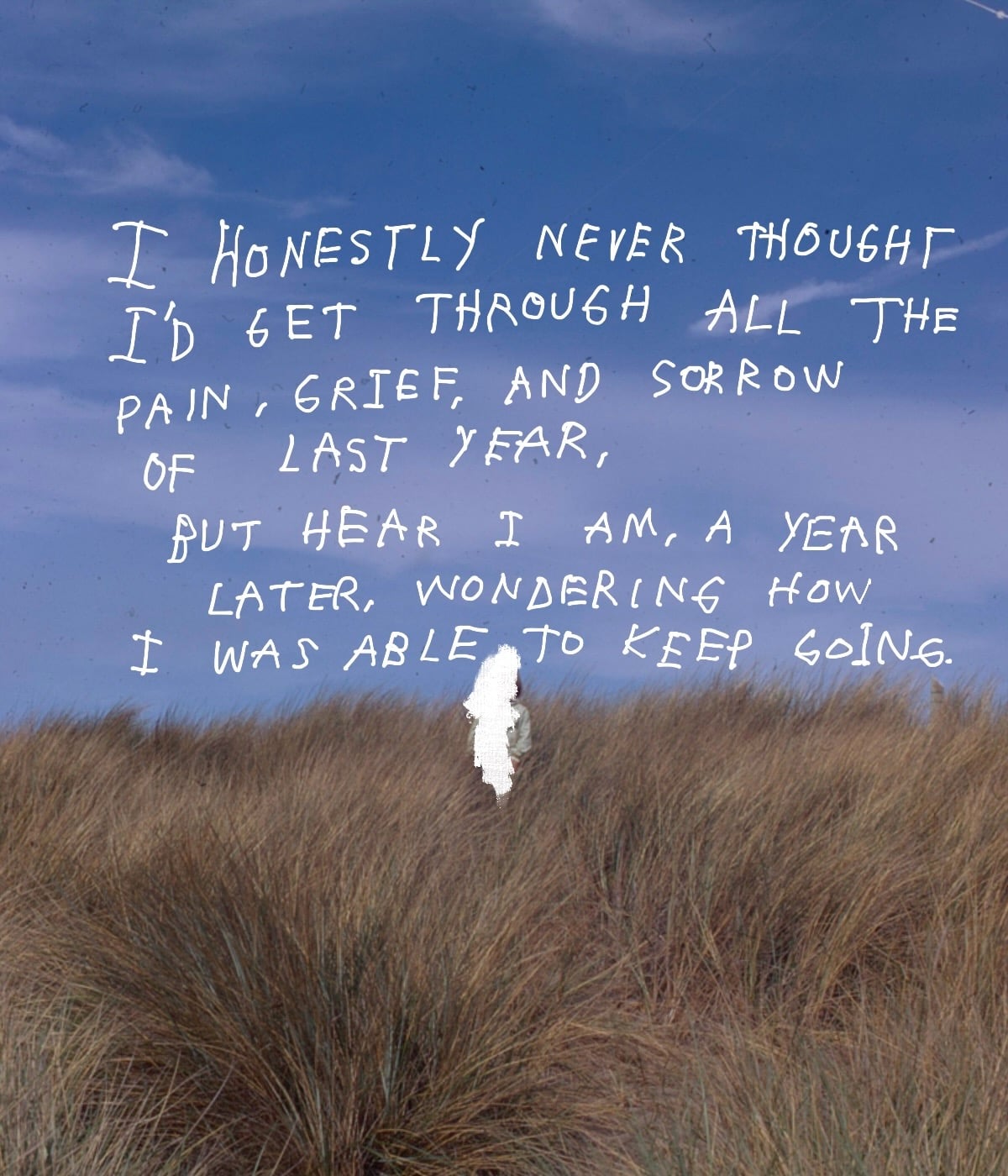
GC: From the beginning of my street art and painting practice, I would incorporate words into my artworks. I was inspired by the works of Jim Goldberg, whose documentary style made me see the value in combining street art, vandalism, and photography. While I was in the US, I met a Filipino who was also undocumented, and I asked if I can make his photograph. He agreed but requested that we do it by showing his back, so that his face wouldn’t be revealed. I then asked him what he wanted to say to his family. It was the first time that I worked with this idea of anonymity and wrote his response on the photograph, which became the point at which my artwork came alive.
After I received the life-changing message of the person postponing their suicide, I decided to stop using my own imagery for other people’s confessions. The minute I made the google form that encouraged people to send their responses or imagery anonymously, I started getting so many messages that I couldn’t keep-up with them. Every day, I would wake up with 100,000 new followers on Instagram. Anonymity brought vulnerability, and when I removed the faces in the images, I realised I was removing identity and therefore making them more relatable. The artworks are now raceless and ageless - it could be you, it could be me.
ZA: It’s interesting to see how the project moved from Instagram to becoming a photobook, and now an exhibition in Manila at Ateneo Art Gallery which also had collaborative material. How have these transitions solidified the essence of the project for you, and do each of these forms feel different to you in any way?
GC: I’ve been working with a photographer and curator, Dennese Victoria, for a long time now, and I really believe in her vision. So of course, I picked her to curate the show with me in a way that it would feel participatory, much-like the project itself.
Even though we picked between 200-300 artworks to display out of the 3000 that I had already made, the gallery felt like it housed new work when I saw it myself. To see it on Instagram, versus in a room-full of prints, is a completely different experience. It feels like the whole place is hugging you.
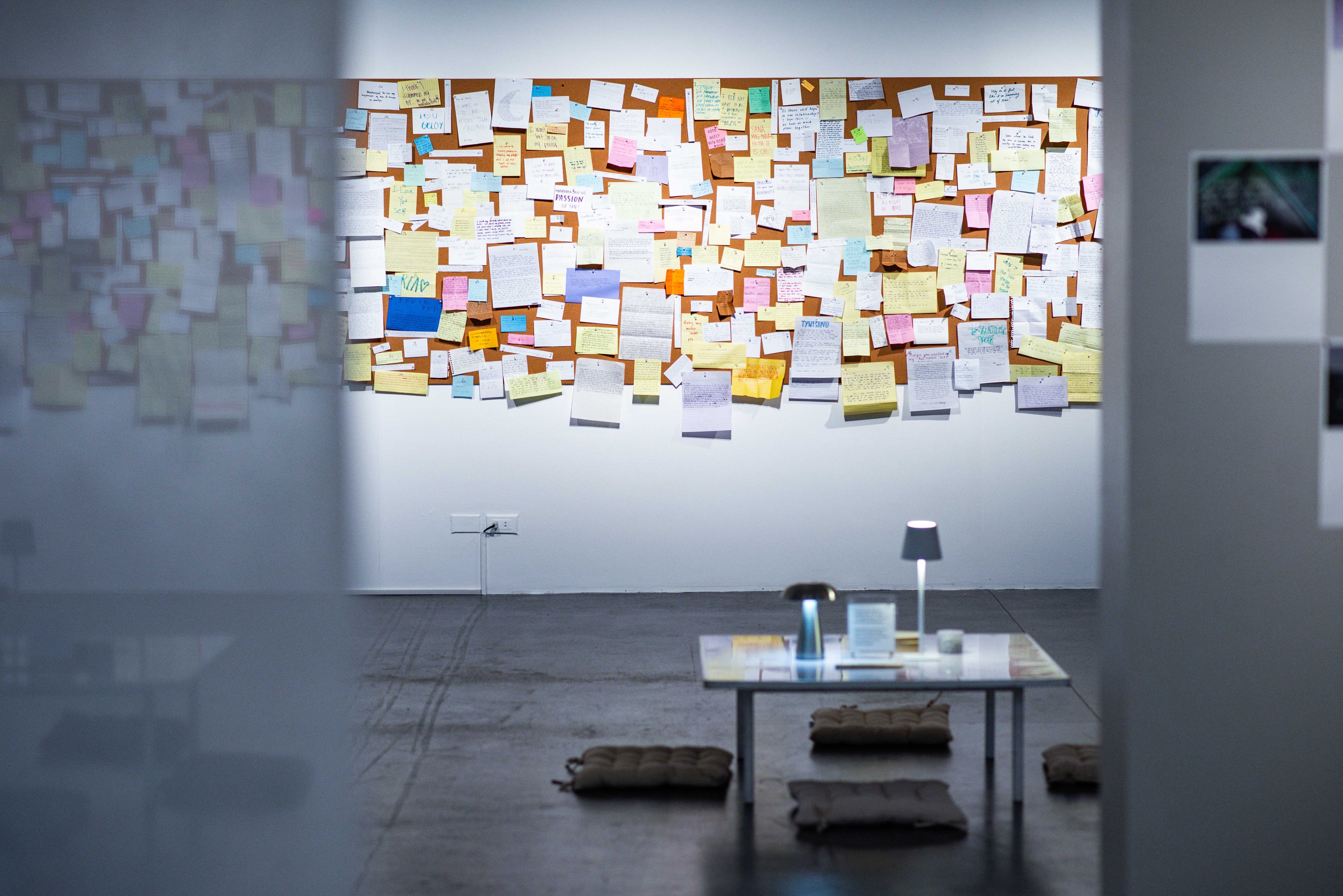
It’s such a simple idea, with such a minimalistic budget, and still so overwhelming. So far, we’ve already seen 18,800 visitors and the number keeps increasing. Apart from my artworks, the second section presents letters written by people nationwide, gathered by volunteers who tapped their communities. And then, the visitors contribute to the wall as well, sometimes bringing in their own paper, or photographs that they want to add to the exhibit.
We have also kept books that are not necessarily photobooks, but even as diverse as books on plants, for people to leave notes inside the folds of the pages incase they don’t feel like displaying it on the wall. So, I think this is becoming something else, a work in itself.
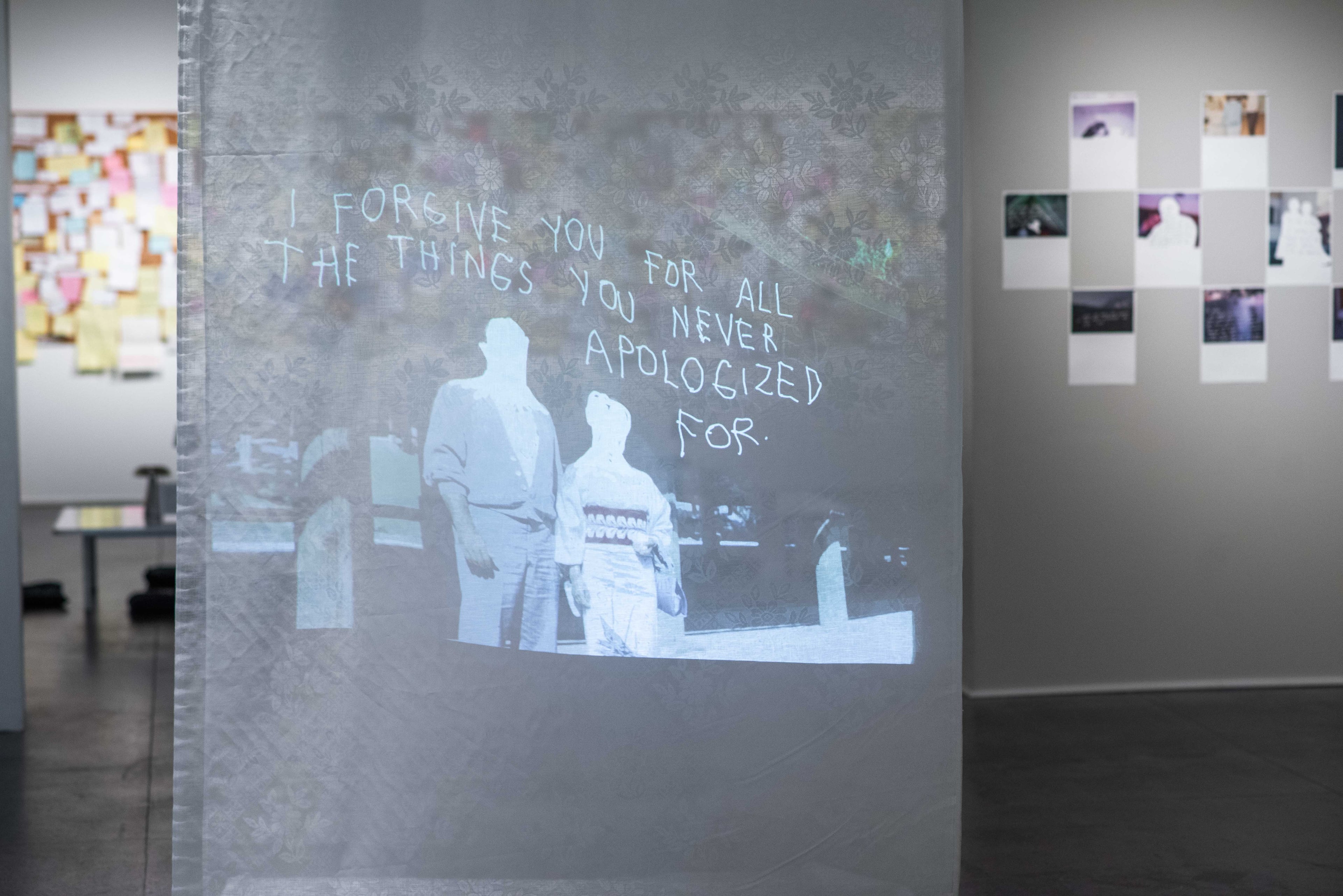
GELOY CONCEPCION, From the series Things You Wanted to Say But Never Did, 2019–present, Video, 48:05 mins loop, Collection of the Artist. Photo by Reeltime Photography, courtesy of Ateneo Art Gallery.
Installation view of Things You Wanted to Say But Never Did, featuring letters collected across the Philippines. Photo by Reeltime Photography, courtesy of Ateneo Art Gallery.
ZA:The exhibition also featured projections on cloth, apart from the imagery on walls. Would you be able to talk about the curatorial decisions for this and how the show came together?
GC: Initially, we were planning to only print a single image on cloth. Until we realised that one print, means that only one letter gets displayed. And so, we shifted to the idea of projection. If you look at the cloth, it feels like a curtain. It’s a mild satin with lace, and what Filipinos usually have in our homes. We placed a fan in front of it so it would move ever-so-slightly, and in this way, the experience of viewing the work feels like sitting in a house yourself.
ZA:I find it interesting that your photobook is a journal as well, in which you leave pages for the viewer to fill in their thoughts, and each image can also serve as a tear-out should it resonate with someone. Was this your way of keeping the collaborative element of the work alive?
GC: Yeah, essentially it would be ideal if the book became a form different from when you first got it. I’m so fascinated by the fact that this work is made by a community where 99% of the people contributing to it will never meet in their lifetime. You could be living all over the world or you could be my sister, I would never know, you would never know, and still, we know so much from the confessions. It’s magical. And of course, the book is testament to this idea of sharing and community. The project is based on that, and if I can give it all away, I will do it.
ZA:I notice that in your own personal practice as well, portraiture seems to occupy a large space. This includes your YouTube page where you often upload snippets and vlogs with your family. It challenges this idea that “Photography is often considered to be a lonely profession” Do you have thoughts on this?
GC: Yes, I think this statement has some truth in it. And maybe that’s the reason why I’ve been craving for human connection in my work. Could it possibly be unprocessed loneliness? My goal has always been about reaching people outside of the art and photography world, which is precisely why I’m on TikTok and YouTube.
I want people to realise that they enjoy making photographs without consciously knowing it. For instance, I met a cashier at 7-Eleven the other day who showed me his tattoo that said- “I make pictures so that I can remember” which is something that I always say. This instance is testament to the power of trying to reach people outside your circle.
It’s nice - this question about loneliness - because now I’m thinking what really drives me to do something? Why do I want to go and meet people, when maybe I can be alone in a forest and photograph birds? Maybe loneliness has something to do with it.
Installation view of Things You Wanted to Say But Never Did, where guests can contribute letters along with other notes collected across the Philippines. Photo by Reeltime Photography, courtesy of Ateneo Art Gallery.
Geloy Concepcion, From the series Things You Wanted to Say But Never Did (2019–present), Photograph with text. Courtesy of the Artist.
ZA: If there is one thing you’ve learnt through over 300,000 honest and vulnerable messages as submissions, what would it be?
GC: Having read around 10,000 messages from all the submissions that I have received, makes me realise that we all have a layer of humanity in us. And if we could channel this outside of our politics, race, and beliefs, we will know how we are connected. We are all the same.